Real Home · Real Kids · Real Life
Nobody Asked, But Here We Are.
Low-toxic, ingredient-and-material-mindful picks for a real home, not a perfect one. I research so you don't have to start from scratch — and I'm honest when I get it wrong.
We accept this without question in medicine. Lidocaine patches. Nicotine patches. Hormone replacement therapy. These work because the skin absorbs what it contacts — directly into the bloodstream.
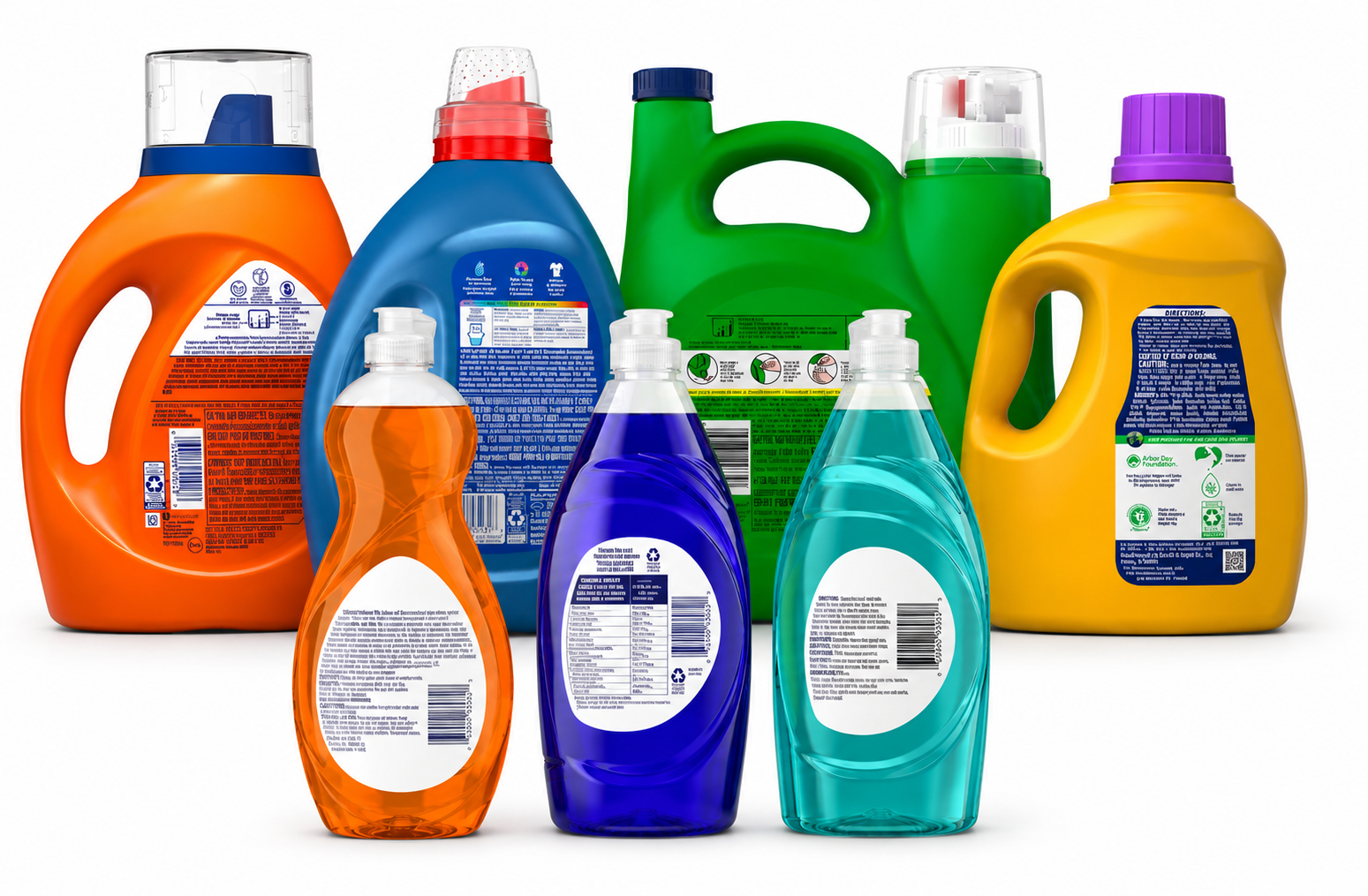
So the question worth asking is: what else is it absorbing? The laundry detergent residue left in your clothes. The dye chemicals in that fast fashion dress worn against your skin all day. The synthetic fragrance in your dryer sheets. The heavy metals used in textile manufacturing that sit against your child's body every single day.
This isn't a theory. It's the same biology. The same skin. The same bloodstream.
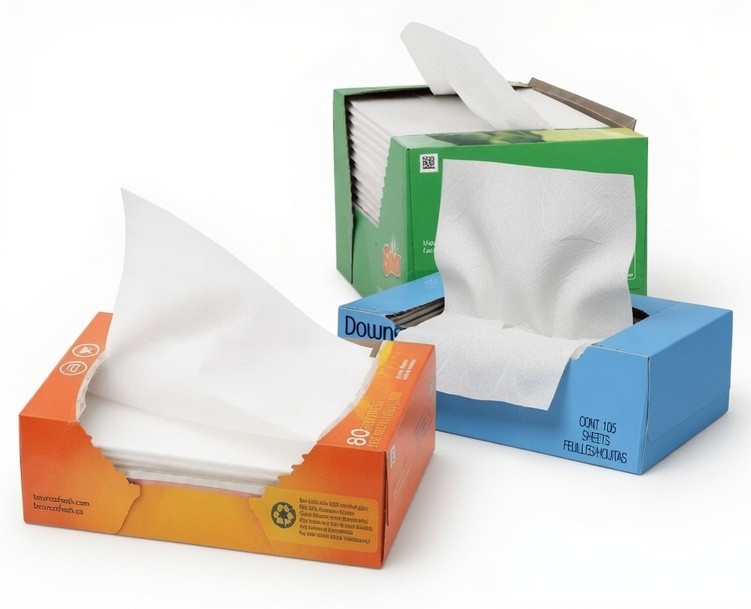
And the industry knows it — because the industry built the door wider, deliberately. A chemical compound gets synthesized, formulated into a consumer product for one purpose, and then the manufacturer's marketing team goes looking for every additional surface, context, and life moment they can attach it to. Each new use case is a new reason to buy more, buy faster, and keep buying. Dryer sheets move from the laundry room to hair, shoes, gym bags, car seats, and dresser drawers — not because consumers discovered this independently, but because Procter & Gamble ran a campaign called Bounce Everywhere promoting exactly that, with a dedicated website, contests, and print ads. Triclosan migrated from hand soap into dish soap, cutting boards, socks, toothbrushes, and clothing — until the FDA banned it from soap in 2016, decades after it had already saturated the product landscape and shown up in human blood, breast milk, and aquatic ecosystems. The same synthetic fragrance compounds appear in your laundry detergent, your dryer sheet, your candle, your kitchen spray, and your body wash simultaneously.
The safety evaluation — when it existed at all — was conducted on the original single-use product in isolation. Nobody assessed what happens when the same compound is in your laundry, your kitchen spray, your hand soap, your candle, and your children's pajamas at the same time. That aggregate exposure is not tested. It is not regulated. And that is not an oversight. It is simply not required. The burden of proof does not fall on the manufacturer to demonstrate safety across combined exposures. It falls on researchers, regulators, and eventually the public — long after the products are already in every home.
The Swap List
Just the swap — fast and scannable. If you want the rationale behind it, tap "Why it matters" below each one. Some people just need to know it's time to switch. Others want the knowledge to vet everything else in their home themselves.
Why It Matters
You don't need this to make the swaps. But if you want to understand the reasoning — so you can apply it to everything else in your home — it's here. Each card shows you the opening argument. The full mechanism, compound-by-compound breakdowns, and sourced detail are in the guides.
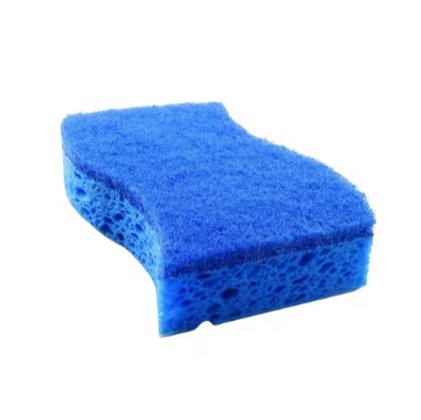
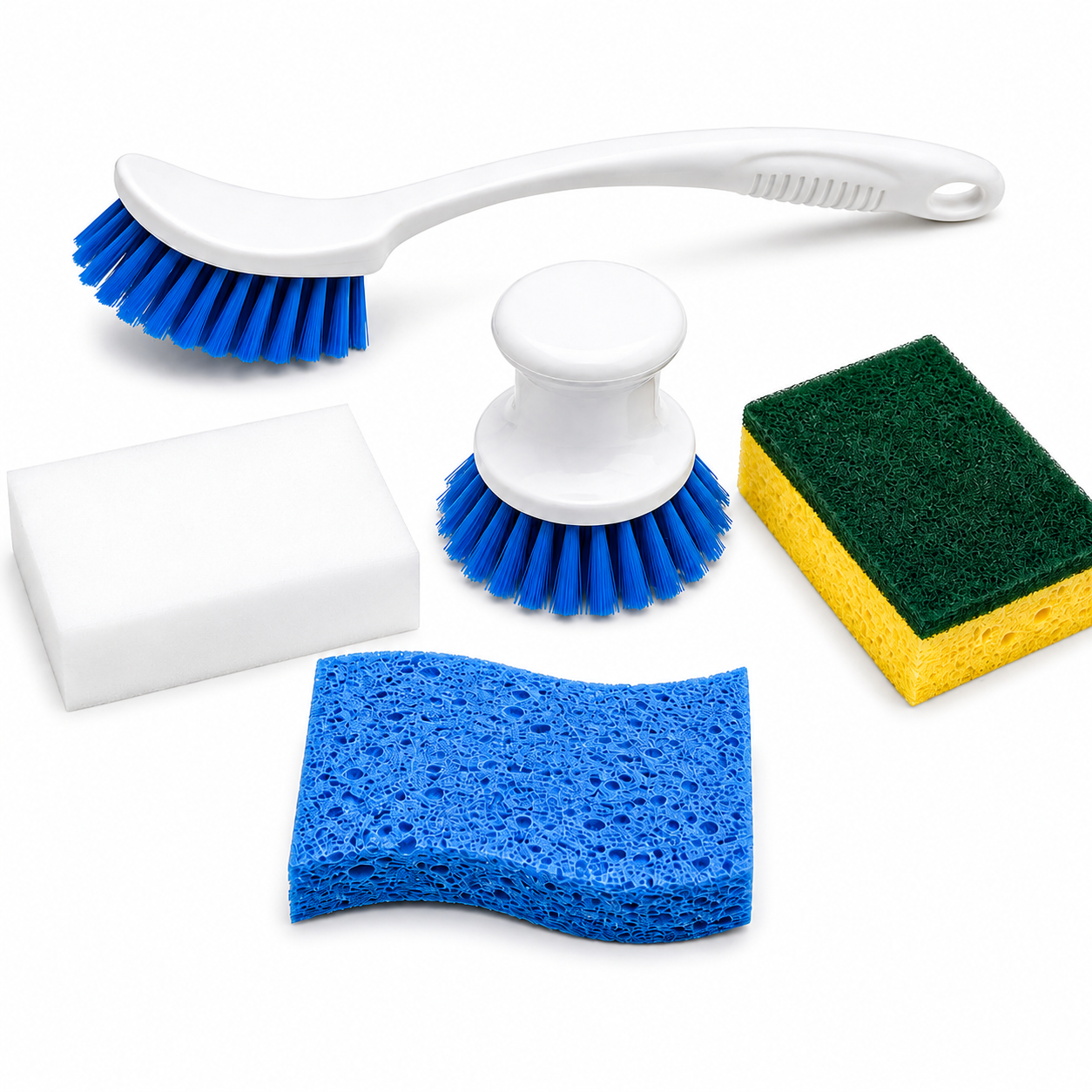
A 2022 study published in Science of the Total Environment found that synthetic kitchen sponges shed both microplastics and nanoplastics as they break down from daily scrubbing — fragments that wash directly down your kitchen drain and into the water supply. Microplastics are the more familiar term, but nanoplastics are smaller, harder to detect, and more likely to cross biological membranes — including the gut lining and potentially the blood-brain barrier.
A 2024 study found that a single household using melamine foam sponges (like popular "Magic Eraser" products) daily could generate trillions of nanoplastic and microplastic particles per month — just from dishwashing. These particles are not filtered by standard water treatment plants.
Nanoplastics have been detected in human blood, lung tissue, liver, kidney, placenta, breast milk, and testicular tissue. A 2024 study published in Nature Medicine found nanoplastic and microplastic particles in human brain samples — at concentrations approximately 7 to 30 times higher than in liver and kidney tissue from the same individuals…
Volume I · What's Actually In It
Where nanoplastics go in the body, how polysorbate 80 facilitates blood-brain barrier crossing, and why it matters before it becomes a consensus finding.
Get the Guide → Both guides available individually or as a bundle — see details ↓When you scrub dishes with a regular kitchen sponge, tiny pieces of plastic break off — too small to see, but real. They go down the drain, and some end up inside living things, including people. Scientists have found these particles in human blood and brain tissue.
Your brain has a strong protective barrier — it's designed to keep most things out. But researchers found that certain chemicals, including one called polysorbate 80 that shows up in things like ice cream and shampoo, can help tiny plastic particles get past that barrier. Scientists are still studying how much this matters day to day, but what's already established is: the particles accumulate in brain tissue over time, and they don't flush out on their own.
The swap: Natural brushes made from plant fibers do the exact same cleaning job — and when they wear out, they break down into nothing harmful. That's the whole difference.
Dryer sheets are one of those products that most people already distrust — and yet most households still use them, because the alternative requires a change in routine and nobody's told them exactly what they're trading away. Let's go through all three layers of the concern: the sheet itself, the chemical film it deposits on your clothes, and the scent.
The physical dryer sheet is a nonwoven polyester fabric — a synthetic substrate made from the same class of petroleum-derived plastic fiber used in fast fashion. As it tumbles through heat cycles, it sheds microfibers into your clothing and vents them into your home's air. It actively releases its chemical load throughout the entire heat cycle, as the fabric substrate breaks down with heat and friction.
The softening agents in dryer sheets work by coating fabric fibers with a thin, lubricating chemical film. The most common are quaternary ammonium compounds (quats) — cationic surfactants that bond electrostatically to fabric fibers and stay there through wearing. They do not rinse off — because there is no rinse cycle in a dryer…
Volume I · What's Actually In It
The quat compounds, cyclic siloxanes, optical brighteners, synthetic musks, phthalates, and the two EPA-listed carcinogens in your dryer exhaust. All of it, with sources.
Get the Guide → Both guides available individually or as a bundle — see details ↓Dryer sheets are made of plastic fabric coated in chemicals. When they tumble in the heat, two things happen at once: tiny plastic fibers break off and stick to your clothes and float into the air in the laundry room, and a chemical coating transfers onto everything in the load.
That coating doesn't wash off — because there's no water in a dryer. So it sits on your clothes all day, and your skin slowly absorbs it. The chemicals in it have been linked to hormone disruption in research studies. Hormones control a lot of things in a developing body — growth, mood, metabolism — which is why this matters especially during childhood and adolescence.
The scent is a third problem. "Fresh linen" doesn't come from linen — it's made from synthetic chemicals derived from petroleum. When the dryer heats up, those compounds turn to gas and fill the laundry room. A university study found that dryer exhaust from scented sheets contained chemicals classified as air pollutants, including two linked to cancer.
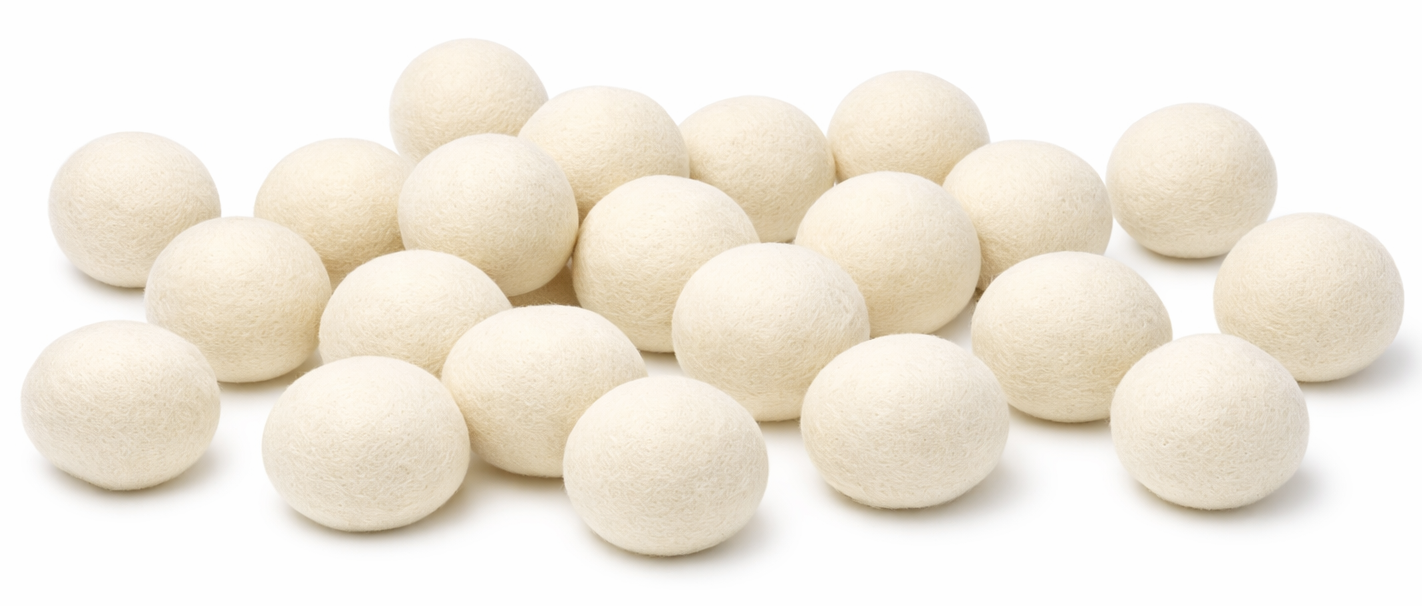
Wool dryer balls do the same job — they separate clothes so they dry faster and reduce static — without any of that. They're just wool. They last for years.
The material itself
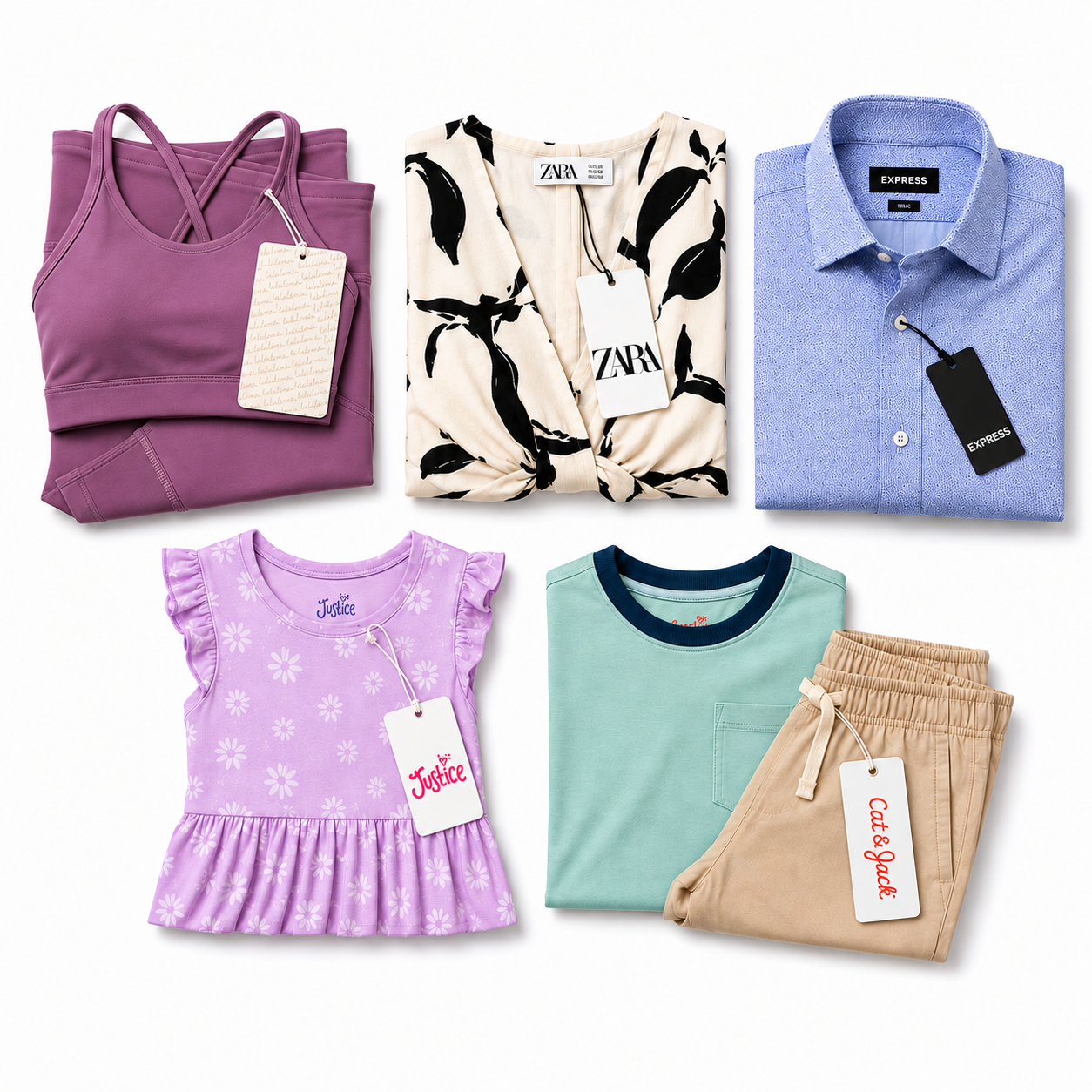
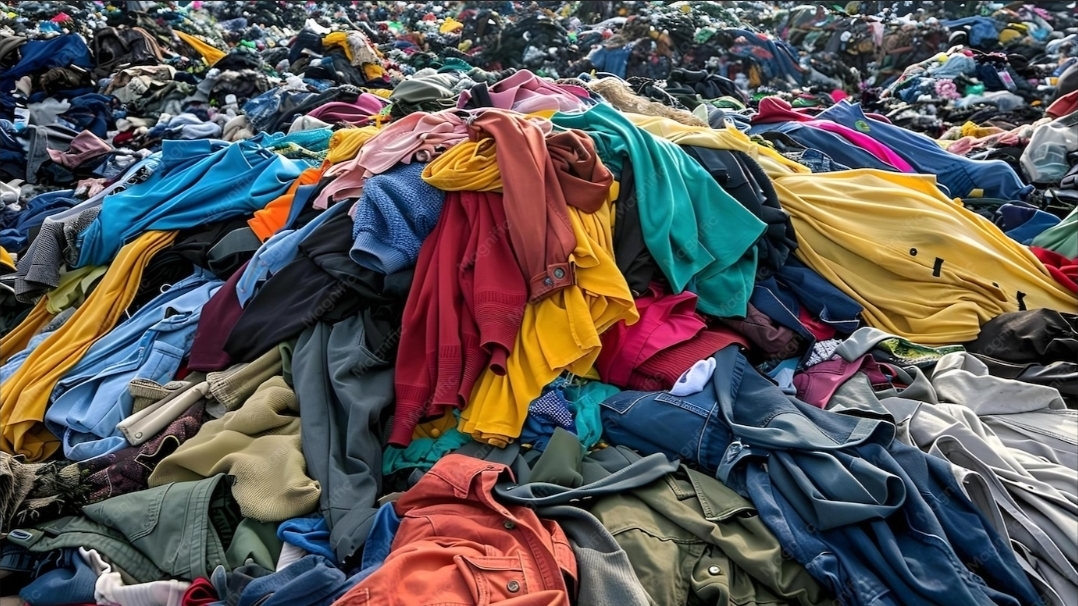
Fast fashion's business model depends on one thing: making fabric as cheaply as possible. That means low-grade synthetic fibers — polyester, nylon, rayon, acrylic — derived from petroleum byproducts and processed with a long list of chemical finishing agents before they ever reach a store shelf. The fiber is cheap. The shortcuts are what make it dangerous.
To make cheap fibers functional, manufacturers apply formaldehyde resins, optical brighteners, softening surfactants, antimicrobial biocides, and PFAS-based water-repellent coatings. These aren't rinsed out. They're embedded in the fiber. When you wear the garment, you wear the treatment. When you sweat, those compounds mobilize against your skin.
PFAS — the "forever chemicals" now in widespread regulatory focus — are embedded in fast fashion at scale, particularly in athletic wear, moisture-wicking layers, and water-resistant outerwear. They don't break down. They accumulate in tissue. The chemical processing story, the heavy metals in the dyes, and the smell problem all go deeper…
Volume I · What's Actually In It
PFAS in activewear, chromium and lead in T-shirts, aromatic amine release from azo dyes, and a practical transition guide that doesn't require a budget overhaul.
Get the Guide → Both guides available individually or as a bundle — see details ↓Fast fashion is clothing made as cheaply and quickly as possible. To keep costs low, manufacturers use synthetic fibers — polyester, nylon, acrylic — which are essentially plastic spun into thread. Then, to make that plastic wearable, they add chemical treatments: things that prevent wrinkles, wick moisture, or hold color. Those chemicals get embedded in the fibers.
Here's the part that matters: those chemicals don't just stay in the fabric. Skin absorbs things it comes into contact with — especially when you're warm or sweating. Sweat actually speeds up how quickly chemicals transfer from fabric into skin. So wearing synthetic clothing all day isn't neutral. It's a low-level, ongoing chemical exposure.
Some of those chemicals are endocrine disruptors, meaning they interfere with hormones. Hormones regulate growth, development, metabolism, and reproductive health. In a body that's still developing, disrupting those signals matters more than it does in a fully grown adult.
Dark colors tend to be worse — black, navy, and dark synthetic fabrics carry higher concentrations of the metal-based compounds used to fix the color.
The direction: Natural fibers — cotton, linen, wool — don't need chemical engineering to function. Start swapping the pieces that touch skin the longest: underwear, socks, pajamas. Work outward from there.
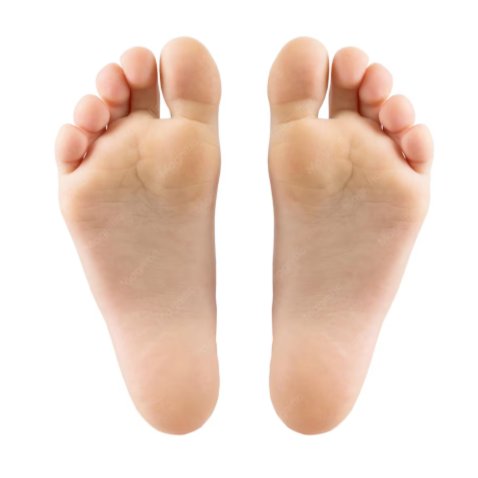
The soles of your feet contain some of the highest concentrations of sweat glands in the body. Sweat opens pores and — as the University of Birmingham research shows — actively increases the dermal absorption rate of chemicals in materials in contact with skin. Spend eight hours in synthetic socks inside close-fitting shoes, sweating, and you've created optimal conditions for chemical absorption.
This applies especially to children, whose developing systems are more vulnerable to chemical disruption at lower exposure thresholds than adults.
The full mechanism continues in the guide…
Volume I · What's Actually In It
The fiber-by-fiber breakdown of synthetic socks, what bamboo actually is (it's not what the label implies), and why natural fiber breathability reduces absorption over the whole day.
Get the Guide → Both guides available individually or as a bundle — see details ↓Your feet have more sweat glands packed into them than almost anywhere else on your body. When you sweat, your pores open up — and that makes your skin temporarily more absorbent. If you're in synthetic socks inside shoes for eight hours, sweating, your skin is actively pulling in whatever chemicals are in that fabric.
Synthetic socks are made from the same petroleum-derived plastic fibers as fast fashion. They carry the same dye chemicals and processing residues. The foot is actually one of the higher-risk spots for this kind of exposure — not because of a special vulnerability, but because of the combination of heat, sweat, and hours of close contact every single day.
Natural fiber socks — wool, cotton — don't carry the same chemical load. They also breathe better, which means your feet sweat less, which means less absorption overall. It's a straightforward swap with a clear reason behind it.
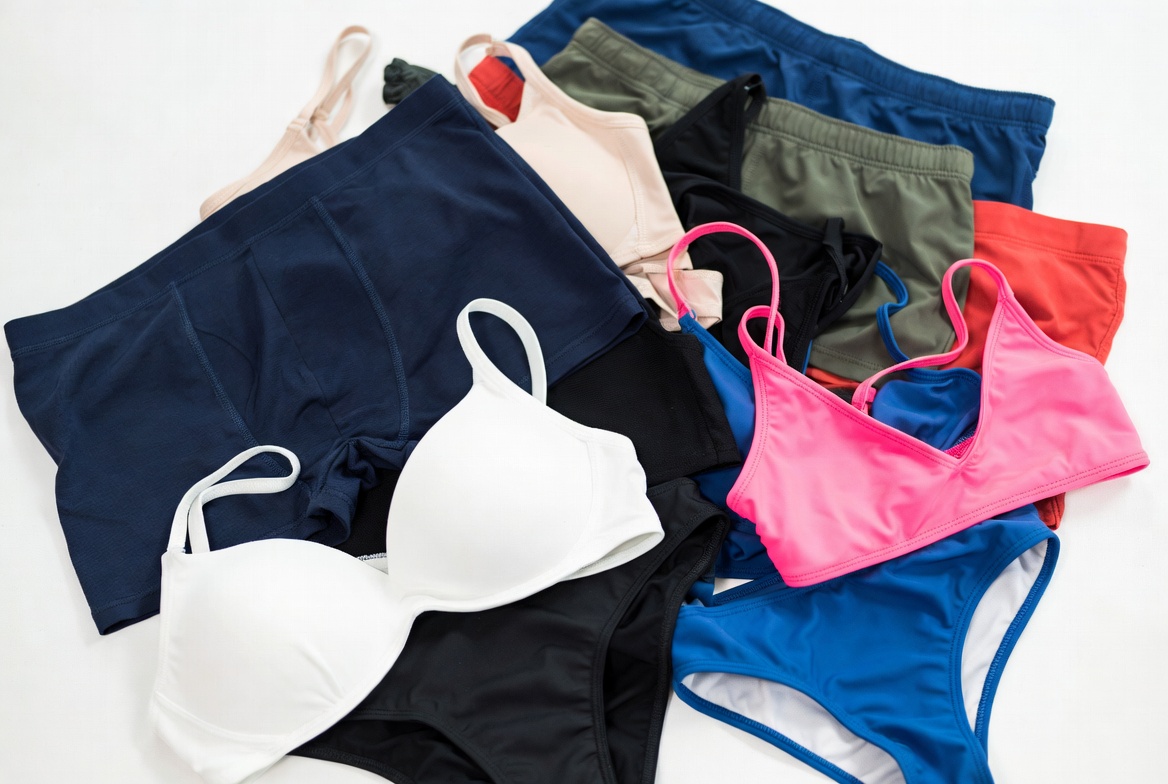
Intimate apparel sits against some of the most absorptive, sensitive skin on the body — areas with thinner skin, mucous membranes, and dense lymphatic tissue. If transdermal absorption happens through thick calf skin, it happens faster and more completely in these areas.
What synthetic fibers actually are. Nylon, polyester, spandex (also sold as Lycra or elastane), and acrylic are not plant fibers. They are plastics — petroleum-derived polymers that are spun into thread. Nylon is polyamide plastic. Polyester is polyethylene terephthalate — the same class of plastic as water bottles. When you put on a pair of synthetic underwear, you are wrapping plastic-derived materials, treated with industrial chemicals, around your most sensitive skin, for 12–16 hours a day.
The full mechanism continues in the guide…
Volume I · What's Actually In It
Why "recycled polyester" is worse in one specific way, the hormone research on synthetic underwear, the PFAS in activewear, what OEKO-TEX actually certifies, and brands doing natural dyes right.
Get the Guide → Both guides available individually or as a bundle — see details ↓Underwear and swimwear sit against your most sensitive skin all day. The skin in those areas is thinner and sits near lymph nodes — part of your immune system. What's in contact with it for 12–16 hours a day matters more than what you wear on your forearm.
Most underwear and swimwear is made from synthetic materials — nylon, polyester, spandex. Those are plastics. To become wearable, they're processed with chemicals: dyes, softeners, and stretch-and-shape treatments. Those chemicals don't disappear — they stay in the fabric, and they're against your skin every single day.
One thing worth knowing: "recycled polyester" sounds like an improvement. It's actually worse in one specific way — the recycling process makes the fibers more fragile, so they shed more plastic particles during washing and wearing. Choosing it as the "sustainable" option doesn't reduce your chemical exposure. It may increase it.
What to look for: OEKO-TEX STANDARD 100 certification means the fabric was independently tested for over 100 harmful substances. GOTS-certified organic cotton is the highest standard for everyday basics. These cost more. For the items your body is in contact with all day, that's usually the right trade-off.
Most people have heard about Red 40 in food. Fewer understand what azo dyes actually are, how they are made, and why the same chemical class showing up in your children's clothing should concern you just as much — if not more.
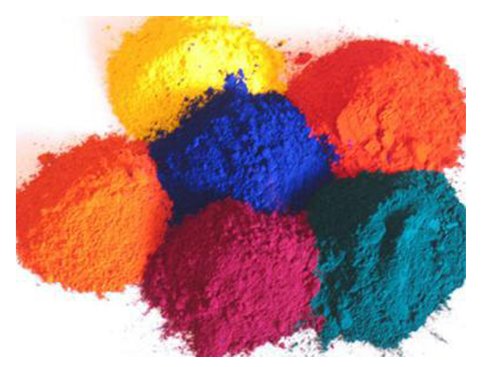
Azo dyes are not found in nature. They are synthesized from coal tar derivatives and petroleum-based chemicals, using a process called diazotization that involves aromatic amines — the same class of compounds classified as carcinogens by the IARC. The brilliant saturated colors — the reds, oranges, yellows, blues — are entirely a product of industrial petroleum chemistry.
The full mechanism continues in the guide…
Volume I · What's Actually In It
Carcinogenic aromatic amine release, reproductive hormone disruption, the gut microbiome connection, cognitive effects in children, immune sensitization — and the natural dye brands getting it right.
Get the Guide → Both guides available individually or as a bundle — see details ↓You've probably heard that Red 40 — the dye in a lot of bright red and orange foods — isn't great for you. The dyes used to color fabric are made the same way, from the same class of chemicals, and in many cases are more concentrated.
These dyes are called azo dyes. They're made from petroleum — the same thing oil and plastic come from — using a chemical process that involves acids and compounds related to pesticides. The colors they produce are very intense and very cheap. That's why almost all fast fashion uses them.
Here's the problem: the chemical bonds that give azo dyes their color can break down under heat, sweat, and friction — which is exactly what happens when you wear clothing all day. When those bonds break, they release compounds called aromatic amines. Some of those are classified as carcinogens, meaning they're linked to cancer with long-term exposure. The EU banned certain azo dyes from clothing in 2003 for this reason. The US has not done the same.
Beyond cancer risk, some of these compounds act as endocrine disruptors — interfering with hormones. Research has linked azo dye exposure to earlier puberty onset in girls, which correlates with the rise of mass synthetic textile production since the 1990s. The same compounds that affect brain chemistry when eaten (as in the Red 40 hyperactivity research) can reach the body through skin contact when they're in clothing.
The direction: Natural and plant-based dyes — made from indigo, madder root, and other plants — don't carry this burden. Some clothing brands use them. They cost more, and they're worth knowing about.
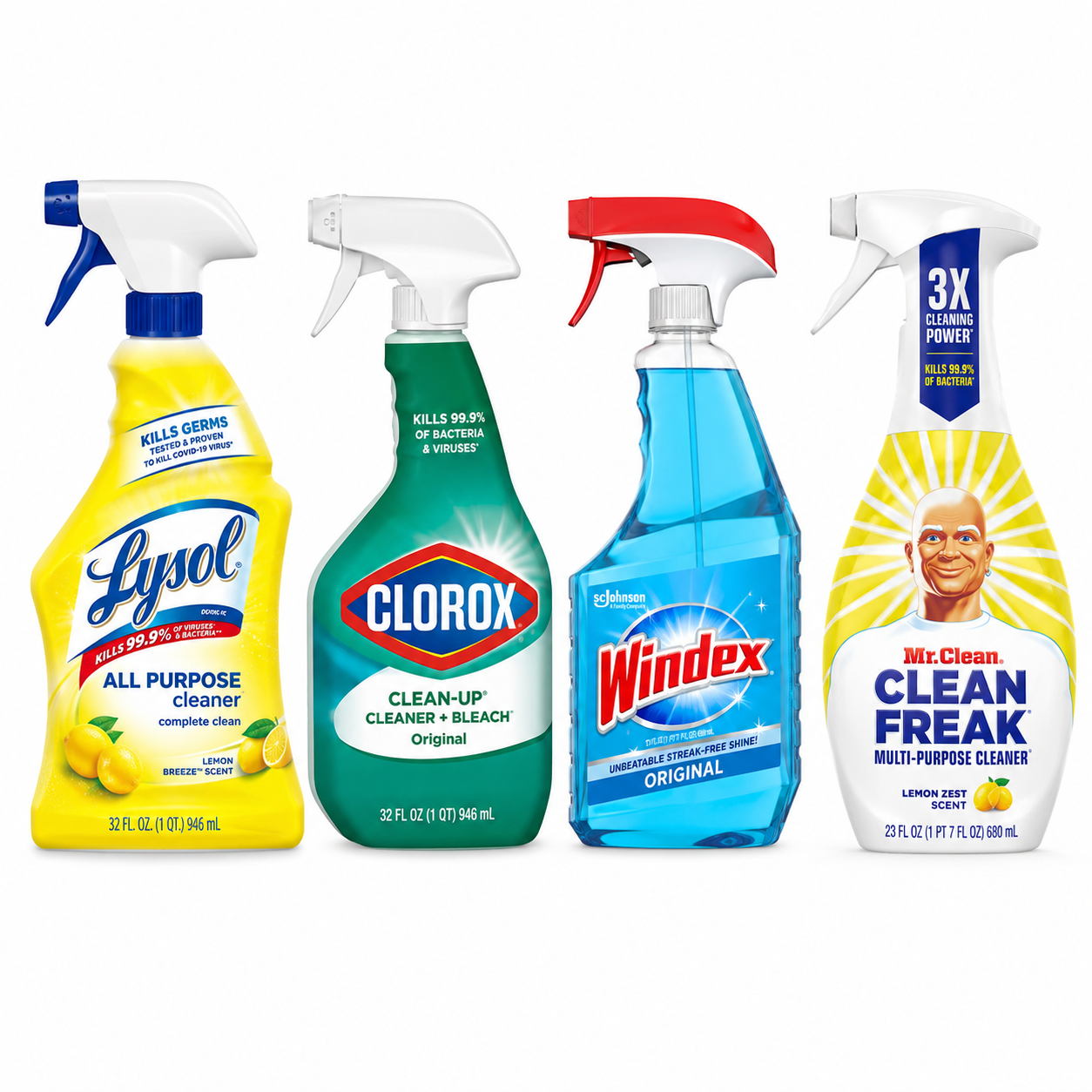
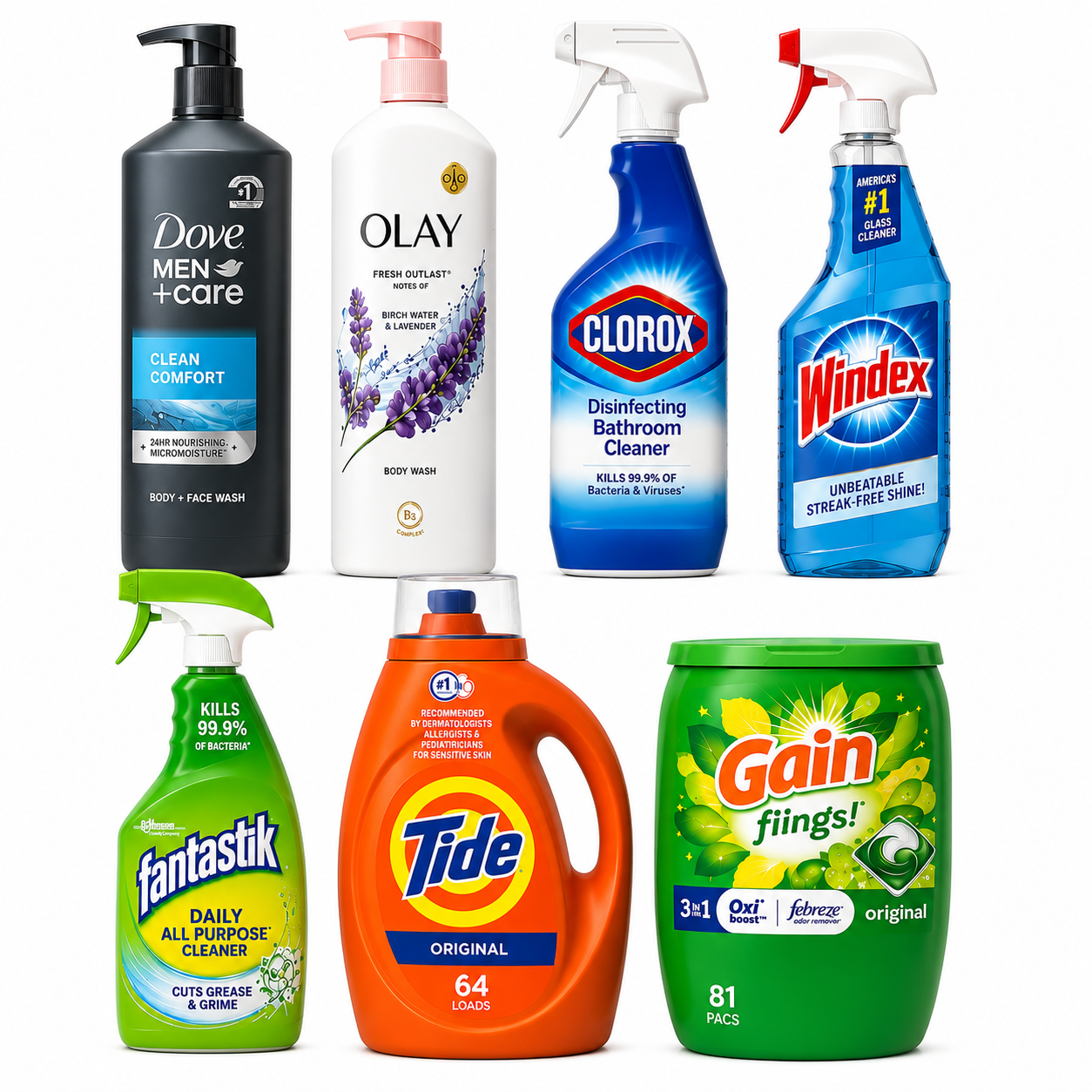
Every day, most households perform a ritual so ordinary it's invisible: spray the counter, run the laundry, lather up in the shower. The question is not whether these products clean. Most of them do. The question is: what else are they doing, and to whom?
There are three routes into the body: inhalation from aerosolized sprays, transdermal absorption from residues in fabric and on skin, and secondary ingestion from residue on food prep surfaces and children's hands. None of these is theoretical. Each is the documented mechanism by which these compounds reach the bloodstream. The skin does not filter. It absorbs. Children absorb at higher rates per body weight than adults.
The full mechanism continues in the guide…
Volume I · What's Actually In It
Synthetic fragrance, SLS/SLES and 1,4-dioxane, phthalates, parabens, quats, formaldehyde-releasing preservatives, triclosan, and a priority replacement order that starts with the highest-exposure products.
Get the Guide → Both guides available individually or as a bundle — see details ↓Most household cleaners, laundry detergents, and body washes do clean things — but the chemicals in them don't disappear after they've done their job.
There are three ways those chemicals enter your body. Sprays create a fine mist that you breathe in — cleaner droplets going straight into lung tissue. Skin contact happens when cleaning residue stays on surfaces and transfers when you touch them, when detergent residue stays in clothes and presses against your skin all day, or when you apply body wash directly to skin. Third is secondary contact — residue on dishes, food prep surfaces, or hands that go near mouths.
One of the most common chemical groups in these products is called quats. They're in most spray cleaners, disinfectants, and fabric softeners. They're designed to keep killing bacteria long after the surface dries — which means they're also persistent on your skin, in house dust, and in the air. Research has linked them to hormone disruption and respiratory effects with repeated exposure.
Synthetic fragrance is another one. The word "fragrance" on any label legally covers dozens of unlisted compounds — there's no requirement to name them individually. Many include phthalates, which interfere with hormone signaling. That "clean linen" or "fresh citrus" smell is a chemical formula, not a plant.
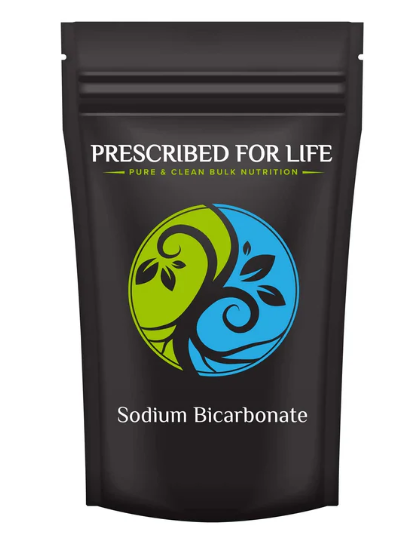
What works instead: White vinegar cuts grease and kills most bacteria. Castile soap cleans surfaces, dishes, and skin. Baking soda scrubs. These are simple, cheap, and don't carry the same chemical load. The cleaning still happens — the exposure doesn't.
Here's something worth thinking about: the simple cleaners that are actually better for you cost less than the heavily advertised brand-name ones. That's not an accident — most of what you're paying for in a popular cleaner or body wash is the packaging, the marketing, and the synthetic fragrance. When we spend less on those, we have more to spend on things that genuinely matter — like better quality clothing that doesn't sit against your skin loaded with chemicals. That's not deprivation. That's a deliberate choice about what's actually worth the money. Choosing differently than most people isn't the same as going without — it's deciding what your priorities actually are.
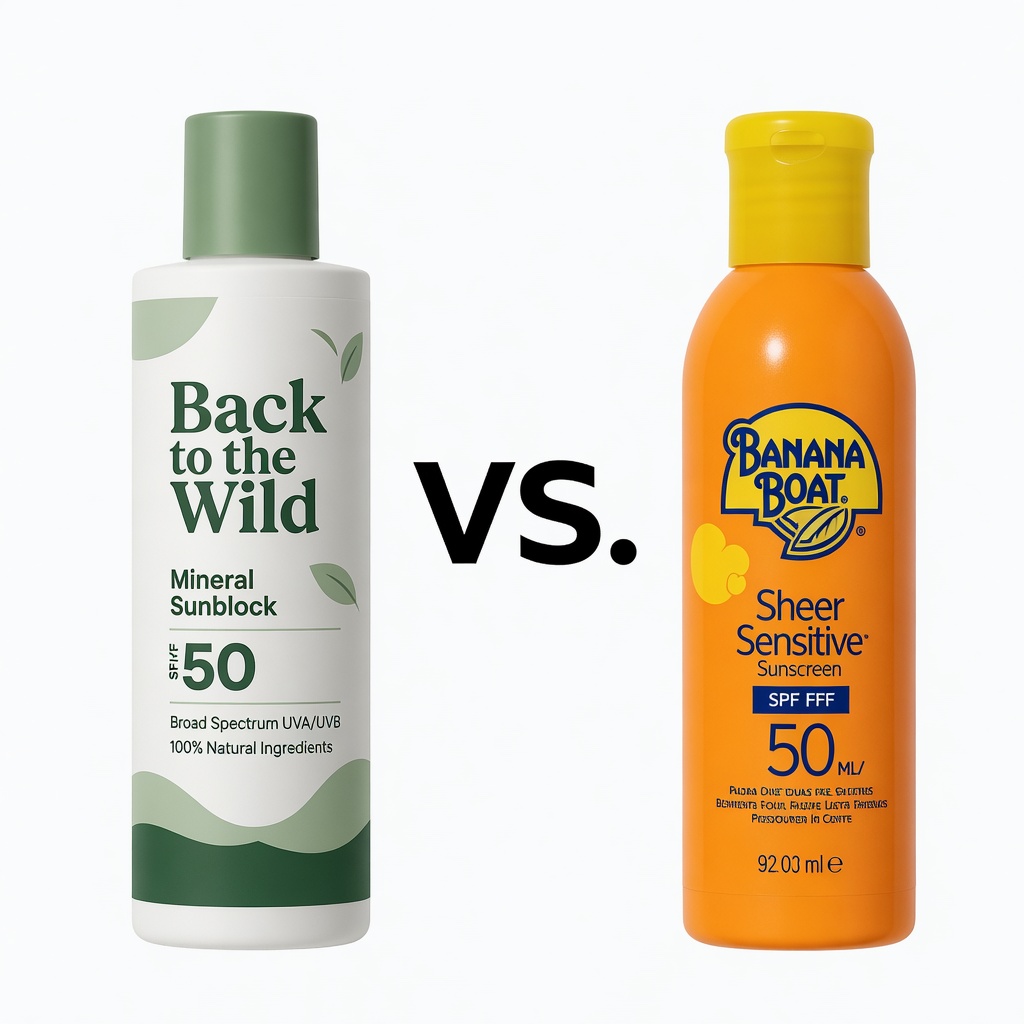
Most people use the words sunscreen and sunblock interchangeably. They are not the same product, they do not work the same way, and they do not carry the same risk profile.
Sunscreen (chemical) works by absorbing UV radiation through a chemical reaction that happens within the skin. The active ingredients — avobenzone, oxybenzone, octinoxate, homosalate — must penetrate the upper layers of skin to function. The FDA's own JAMA studies (2019, 2020) found that all tested chemical sunscreen ingredients were absorbed into the bloodstream at concentrations exceeding the FDA's threshold for safety without toxicological studies — after a single application.
The full mechanism continues in the guide…
Volume I · What's Actually In It
The full compound breakdown (oxybenzone, octinoxate, homosalate, avobenzone), the reef toxicity data, the DIY zinc oxide formula, and the UPF clothing hierarchy — clothing first, sunblock for exposed skin.
Get the Guide → Both guides available individually or as a bundle — see details ↓Most people use "sunscreen" and "sunblock" to mean the same thing. They're not. They work completely differently — and that difference matters for what they actually do inside your body.
Chemical sunscreen absorbs UV radiation by having the active ingredients soak into the upper layers of your skin, where a chemical reaction converts UV into heat. For this to work, the chemicals must get into your skin. That's not a side effect — it's how the product is designed. The FDA ran studies in 2019 and 2020 that found all tested chemical sunscreen ingredients entered the bloodstream at concentrations that would normally require safety testing. After four days of regular use, those concentrations kept rising.
Mineral sunblock (with zinc oxide) works differently: it sits on top of skin and physically blocks UV radiation. It doesn't need to be absorbed to work. It stays on the surface. That's why it's the lower-risk option — the protection mechanism doesn't require the active ingredient to enter your body at all.
Some of the chemical sunscreen compounds — particularly oxybenzone — are endocrine disruptors, meaning they interfere with how hormones work. Oxybenzone has been found in the bloodstream, in breast milk, and in amniotic fluid. It's also been detected in coral reefs, where it's toxic enough to cause bleaching at concentrations measured in parts per trillion. Several states and countries have banned it from reef environments.
The practical shift: Clothing first — a UPF-rated shirt blocks UV better than any sunscreen. For exposed skin, non-nano zinc oxide mineral sunblock is the cleanest option available. It's white, it's not invisible, and it works.
Real Alternatives
The problem isn't that these products work. Some of them do. The problem is what else they're doing while they work. Here's what to reach for instead — for the actual problem you're trying to solve.
Where the "alternative uses" actually came from
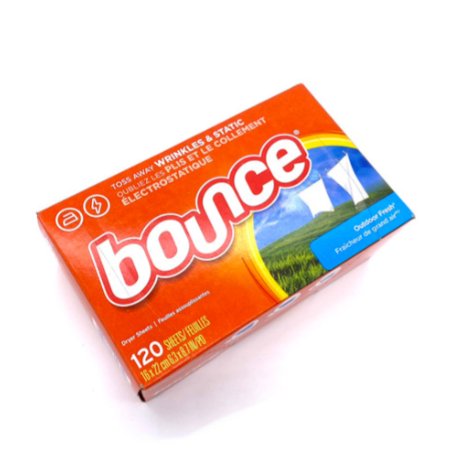
Dryer sheets were invented in 1969 by Conrad Gaiser — a man in the soap industry who applied fabric softener to a piece of flannel to save his wife a trip to the laundry room at the right moment. He called the prototype Tumble Puffs, patented it, and sold the rights to Procter & Gamble, who launched it as Bounce in 1975. One product, one purpose: reduce static in the dryer.
The "alternative uses" — stuffing dryer sheets in sneakers, gym bags, cars, dresser drawers, under furniture, on hair, on clothing, as insect repellent — were not organic consumer discoveries that P&G later noticed. P&G actively promoted them. The company ran a campaign called Bounce Everywhere, complete with a dedicated website (BounceEverywhere.com), a public contest offering to feature winning entries in print ads, and ongoing marketing specifically designed to get people thinking about using Bounce outside the laundry room. The campaign promoted gym bags, cars, and sneakers by name. Lifestyle media picked it up. Consumer tip lists multiplied. The alternative uses spread as folk wisdom — but the seed was planted by the manufacturer.
The practical effect: a product designed for a single dryer cycle became something people kept everywhere in their home and applied directly to hair, skin, and surfaces — dramatically expanding contact exposure beyond what the original laundry application already created. Whether or not that was the intent, it was the outcome. And the "tips" are still circulating, decades later, with no mention of what's in the sheet.
Why it's a problem
Rubbing a dryer sheet on your hair deposits quat compounds, synthetic fragrance, and phthalates directly onto your scalp — one of the most absorptive surfaces on the body. You're also inhaling the fragrance at close range. The sheet itself sheds synthetic microfibers onto your hair and face. Static is a symptom of dry, charged air. The dryer sheet masks it chemically instead of addressing it.
Why it's a problem — and why it keeps happening
Static cling is almost exclusively a synthetic fabric problem. Natural fibers — linen, cotton, wool, silk — do not generate the electrostatic charge that causes cling because they are hygroscopic: they naturally absorb ambient moisture, which conducts charge away. Petroleum-derived synthetic fibers (polyester, nylon, acrylic, rayon) are non-conductive and build up static with friction. If you're using a dryer sheet to solve static cling, the real problem is what the garment is made of — and you're applying a chemical coating to a synthetic fabric that's already sitting against your skin.
Why it's a problem
The quat coating and waxy residue from a dryer sheet does create temporary shine on chrome — but it leaves a chemical film on surfaces your hands touch constantly, particularly faucets you handle before eating or touching your face. That film transfers. In a bathroom, it deposits on surfaces your children touch. The fragrance volatilizes in the warmth and humidity of the bathroom. It's a lot of ongoing chemical contact for a surface you could clean cleanly.
Why it's a problem
The dryer sheet "works" here by coating the deodorant residue with its waxy quat film — blurring the white mark rather than removing it. The deodorant is still there. Now there's also a dryer sheet chemical layer on top of it, sitting against underarm skin — an area with dense lymphatic tissue and higher absorption rates than most body surfaces. You've added a problem to a problem.
How we got here — and why the "safe" label never made sense
In 1938, a DuPont chemist named Roy Plunkett was trying to develop a new refrigerant. One morning, a pressurized canister of tetrafluoroethylene gas failed to release — and when his assistant sawed it open, they found a white, waxy, extraordinarily slippery solid had formed inside. That accident was PTFE. Polytetrafluoroethylene. What we now call Teflon.
DuPont didn't know what to do with it at first. It went to the Manhattan Project — PTFE was used to coat valves and seals handling highly corrosive uranium compounds in the atomic bomb program, because almost nothing else could withstand the chemistry involved. After the war, the material made its way into industrial applications. Then, in 1954, a French engineer figured out you could bond it to aluminum cookware. The nonstick pan was born.
Think about that sequence: a material discovered by accident, proven in wartime weapons manufacturing, and then deemed suitable for the pan your eggs cook in every morning. The logic that bridged those two uses was essentially: it's chemically inert, it doesn't react, therefore it's safe. That logic held for decades — until it didn't.
The problem wasn't just PTFE itself. Manufacturing PTFE required PFOA — perfluorooctanoic acid — a processing aid that DuPont had internal evidence was harmful to workers and surrounding communities as far back as the 1950s. That information was suppressed for over fifty years. PFOA has since been linked to kidney cancer, testicular cancer, thyroid disruption, and immune suppression. It was phased out of production in 2013 — but by then it was already in the blood of virtually every American tested, and in drinking water supplies across the country.
The "PFOA-free" label on modern nonstick cookware is real — PFOA is no longer used in manufacturing. But "PFOA-free" does not mean "PFAS-free." PTFE itself is a PFAS — per- and polyfluoroalkyl substance. The carbon-fluorine bond that makes it slippery is the same bond that makes PFAS chemicals "forever chemicals." They don't break down. In the environment, in tissue, anywhere. And when nonstick coatings overheat — above 500°F (260°C), a temperature a dry pan on a gas burner can reach in minutes — PTFE begins to decompose and release toxic fumes. The condition has a clinical name: polymer fume fever. Flu-like symptoms: chills, fever, coughing, chest tightness. It's well documented. It has killed pet birds in kitchens. It has sent people to hospital.
If your pan is scratched — and most nonstick pans scratch — the coating is already fragmenting into your food. A single scratched pan can release millions of microplastic particles per use. The convenience of nonstick was never free. The cost just wasn't on the label.
What to use instead — task by task
Cookware: cast iron seasoned with a fat you trust — I use grass-fed tallow, high smoke point, stable saturated fat, polymerizes cleanly. Buy Lodge unseasoned, or strip thrifted cast iron and season from bare metal. Stainless steel with welded or rivet-free handle construction — aluminum rivets are a different alloy in direct food contact, a variable worth eliminating. Borosilicate glass for baking and reheating — genuinely inert, not the same as soda-lime tempered glass (the US Pyrex formula since 1998). Solid ceramic baking dishes for roasting. On ceramic-coated "PFAS-free" nonstick: I'm not convinced — it's a brand claim, not a certified standard.
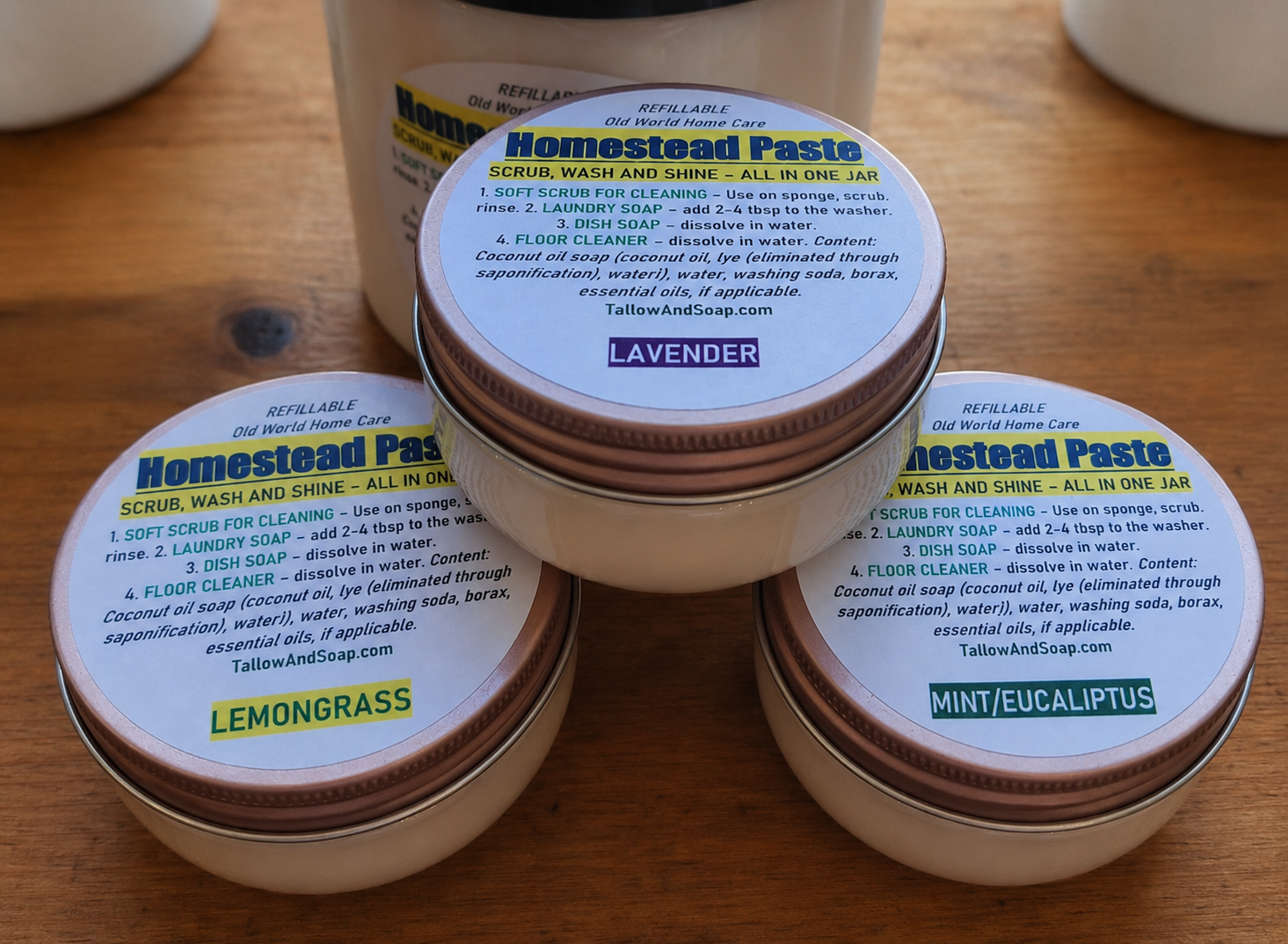
Daily counters, sinks, stovetops: diluted white vinegar (1:1 with water) or a castile soap solution. For scrubbing surfaces, Ginger's Homestead Cleaning Paste (SoapBox by Holistic Home) handles shower, sink, and countertop scrubbing with clean, personally vetted ingredients. Add a few drops of tea tree essential oil to your spray for added antimicrobial effect.
Bathroom toilets, tubs, and tiles: baking soda paste with castile soap as a scrub; hydrogen peroxide spray for disinfection. Effective against common bathroom pathogens without leaving synthetic residue on surfaces your children touch. For a 3rd-party tested source: Nature's Freedom 12% Food Grade H2O2 — NSF certified (NSF/ANSI 60 & 50), two ingredients only: food-grade H2O2 and purified water. No stabilizers. Dilute 1:3 with water for a 3% working solution for surfaces, or use at 12% for grout and tile. Store in a dark bottle away from heat.
Dryer: wool dryer balls — they do the same mechanical job as a dryer sheet (separate clothes, reduce static, cut drying time) without the chemical coating, synthetic fiber shedding, or fragrance VOC exhaust. They last 1,000+ loads.
Laundry: washing soda + powdered castile soap + optional oxygen bleach (sodium percarbonate) for whitening and stain lifting. Clean, effective, no synthetic fragrance residue left in the fabric.
Washing synthetic fabrics (polyester, nylon, activewear): standard detergent and water can't fully clear odor from synthetic fabric — the fiber is hydrophobic and binds fat-based odor molecules that water repels rather than lifts. You need enzymes. Specifically: protease (breaks down protein compounds) and lipase (breaks down fat-based compounds) — the two enzyme classes that target the actual odor mechanism in synthetic textiles. Three clean-formulated options worth trying: Dirty Labs (fragrance-free, no optical brighteners, specifically engineered for synthetic fabric "permastank"), Molly's Suds Super Powder (protease, mannanase, amylase, and cellulase enzyme blend — no synthetic fragrance, no optical brighteners, no SLES), and Lume BIOfilm Buster as a pre-soak for heavily embedded odor. For stubborn cases: soak in an enzyme solution for at least one hour before washing, and wash warm — cool water doesn't fully activate enzyme function or penetrate hydrophobic fiber. Wool dryer balls don't go in with loads washed in synthetic detergent. Run an empty hot vinegar cycle — sometimes two or three — before running natural fiber or kids' loads after a synthetic detergent wash.
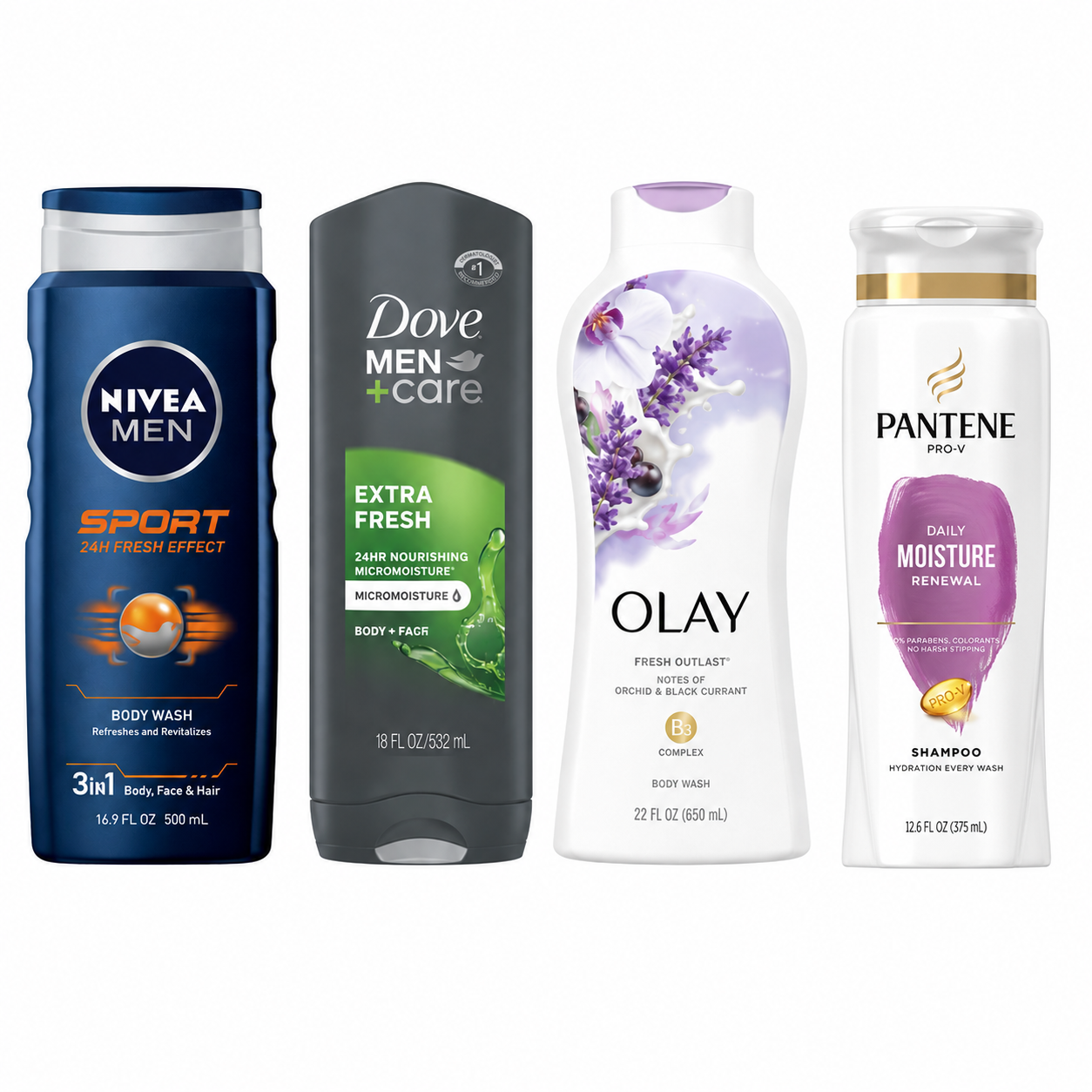
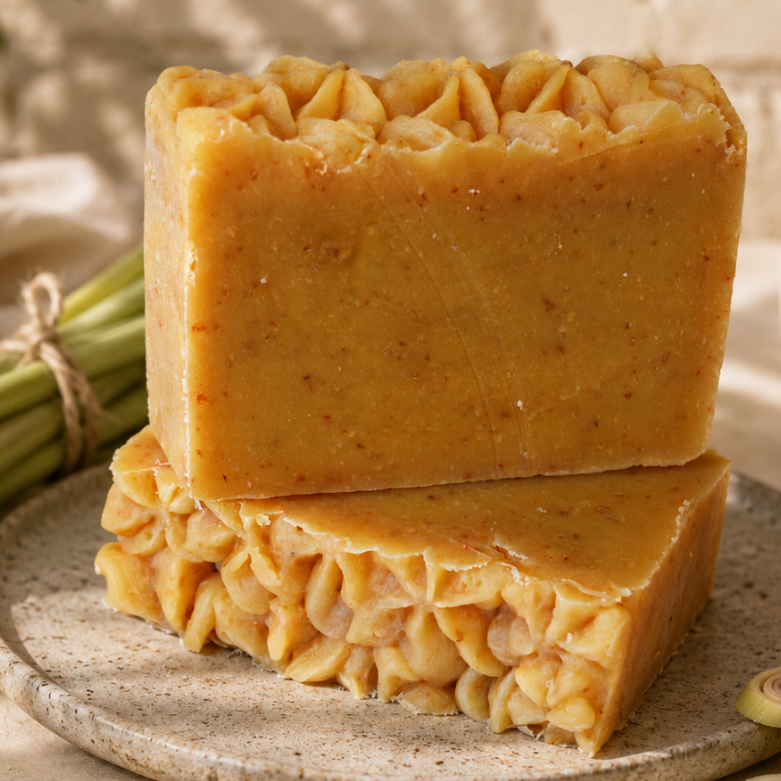
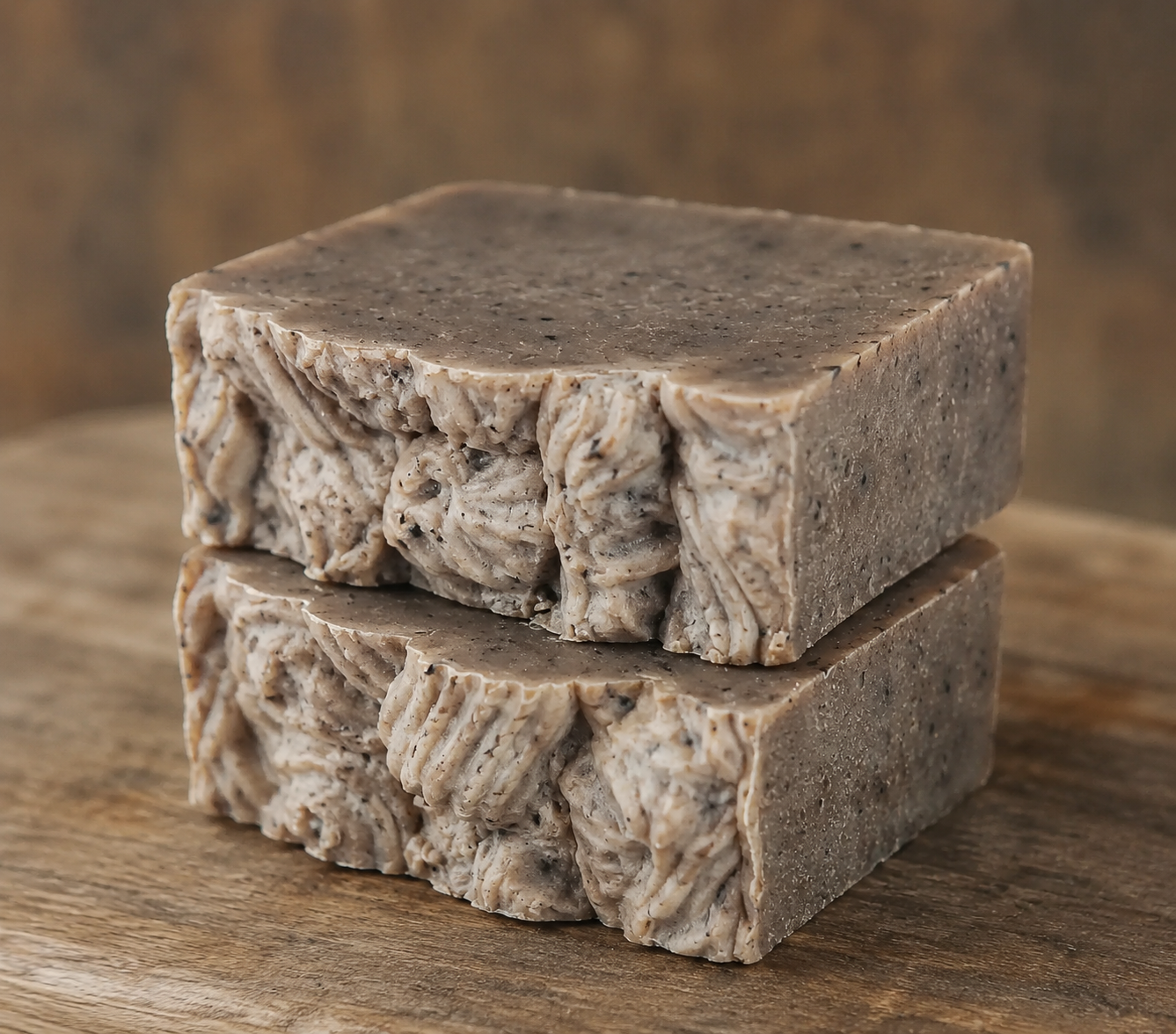
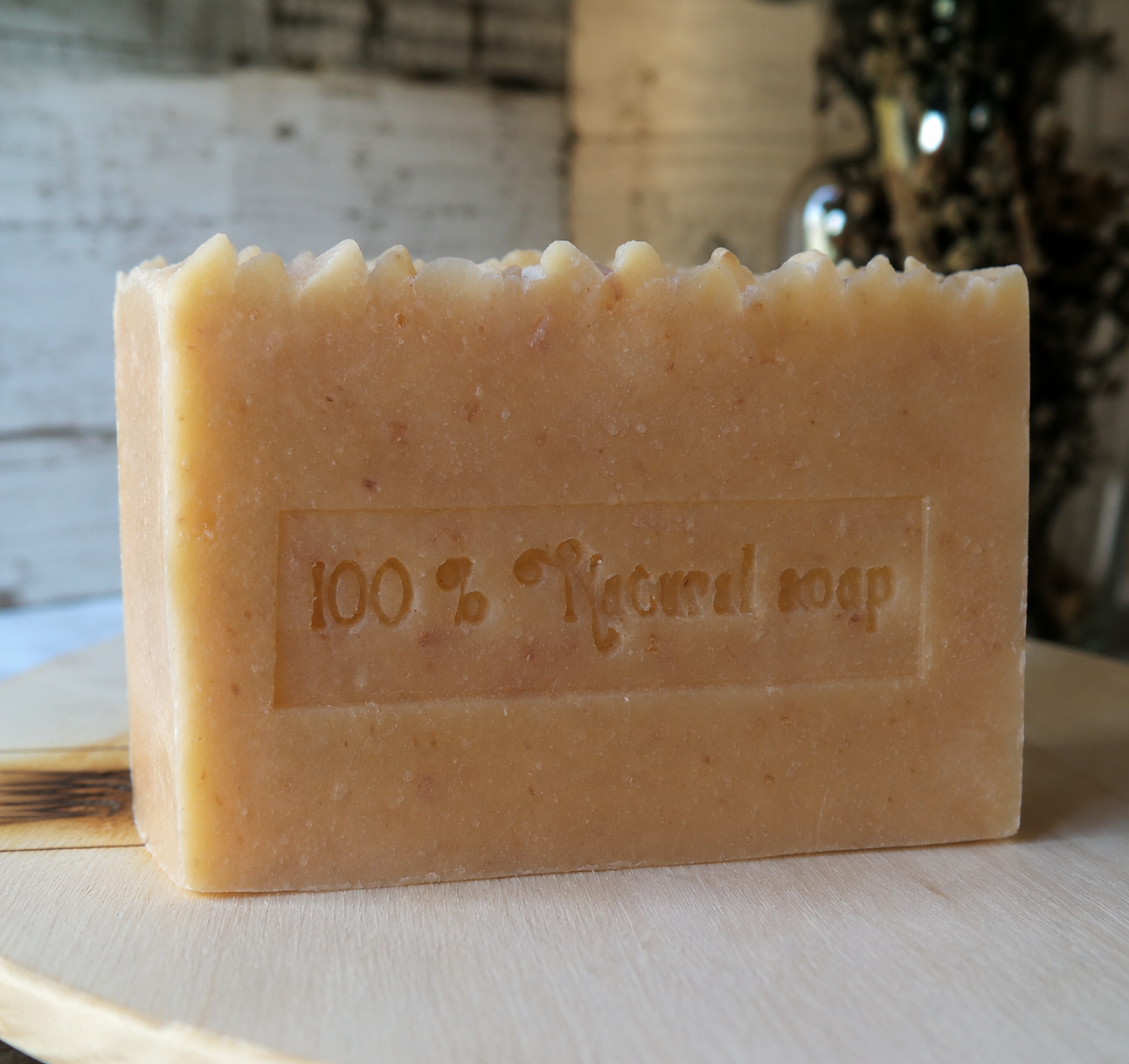
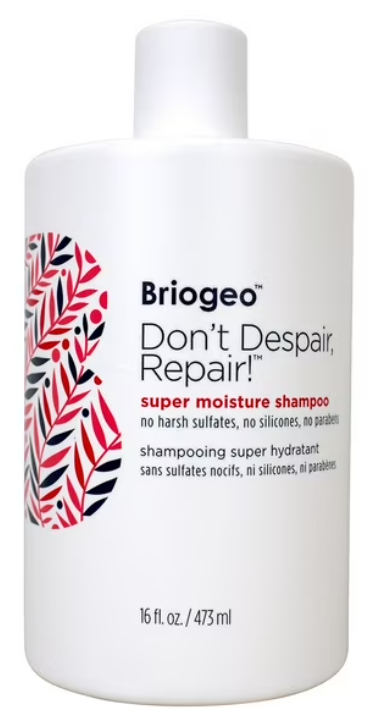
Body and hair: tallow-based bar soaps with clean, minimal ingredient lists and no synthetic fragrance. I use Ginger's Lemon Grove Tallow Soap with Pumice, Rise & Shine Morning Brew Tallow Soap, and her Gardener's Soap with Pumice (vegan). On shampoo bars: I've tried them. They did not work for me — and I'm not going to recommend something that requires a level of commitment most people won't sustain. Shampoo bars work for some hair types and some water conditions; they didn't work for mine. For liquid shampoo, the clean options are genuinely narrow once you rule out sodium benzoate — which I do, completely. Most "natural" shampoos on the market use it as a preservative, including many EWG Verified options. I use Briogeo Don't Despair, Repair! when I find it at TJ Maxx — no sodium benzoate, no SLS, no silicones, no parabens, though it uses a "parfum" listing I'm not entirely comfortable with. If I'm paying full price, I buy Rahua Classic — short ingredient list, potassium sorbate only as preservative, named palo santo essential oil, no sodium benzoate. It's the one I'd actually pay full price for. For kids: Clean Kids Naturally — Tropical Orange Burst — EWG Verified, short list, no sulfates, no synthetic fragrance, no sodium benzoate (verify this on the current label each time you buy, as formulations can change). For the scalp: the oil overproduction that drives people back to conventional shampoo is largely the SLS stripping cycle doing its job. It recalibrates.
Face and body moisturizing: grass-fed tallow creams and butters are nutrient-dense, skin-compatible, and contain no synthetic emulsifiers or fragrance. Tallow's fatty acid profile closely mirrors human sebum — it absorbs without occlusion and without a carrier list of unpronounceable stabilizers. I use Ginger's Blue Tansy Tallow Butter and Chamomile Tallow Butter on my face, and her Naked Tallow Butter and Lotion Bar for body. All grass-fed and finished.
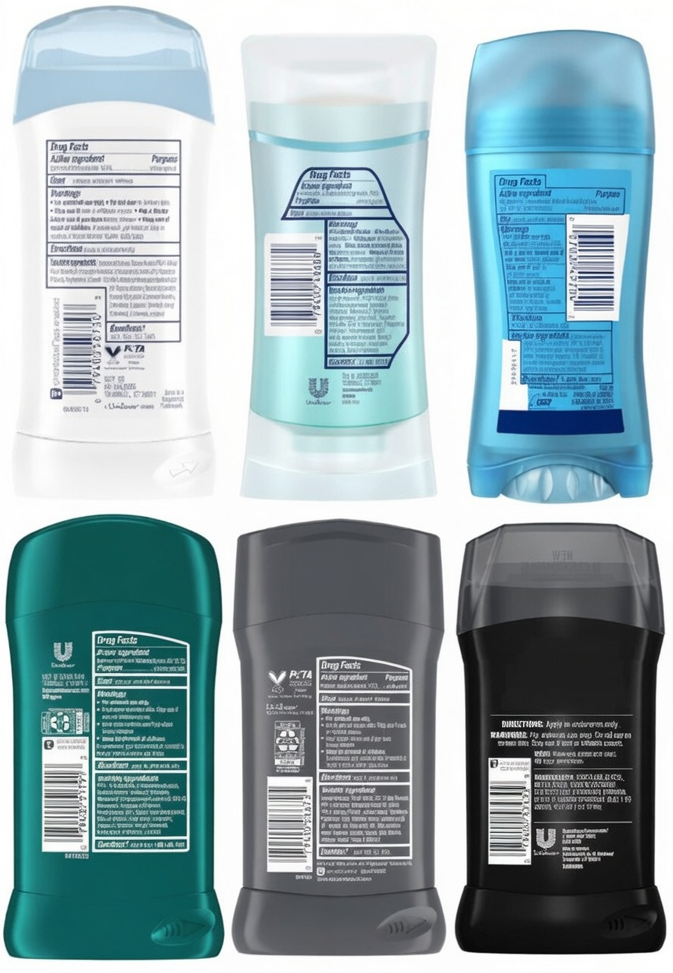
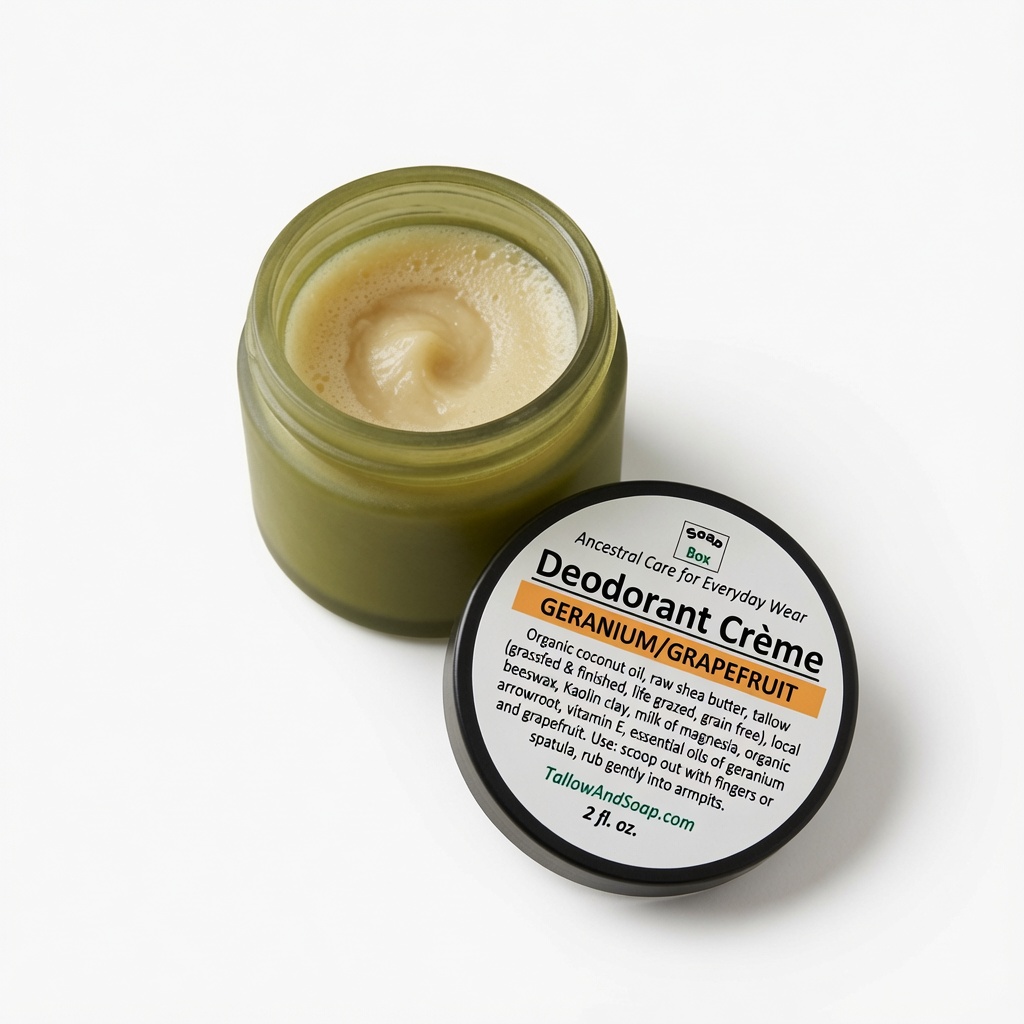
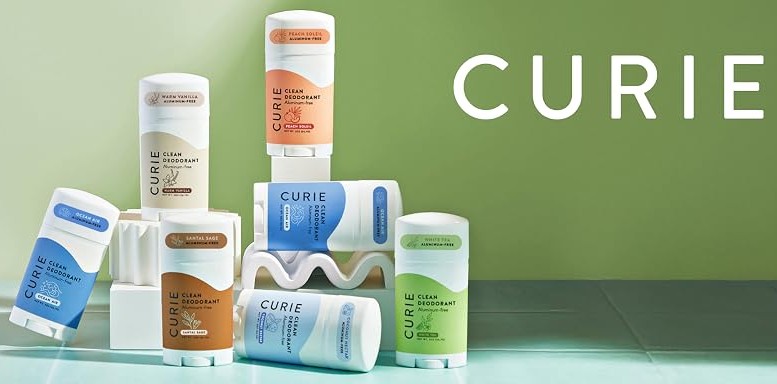
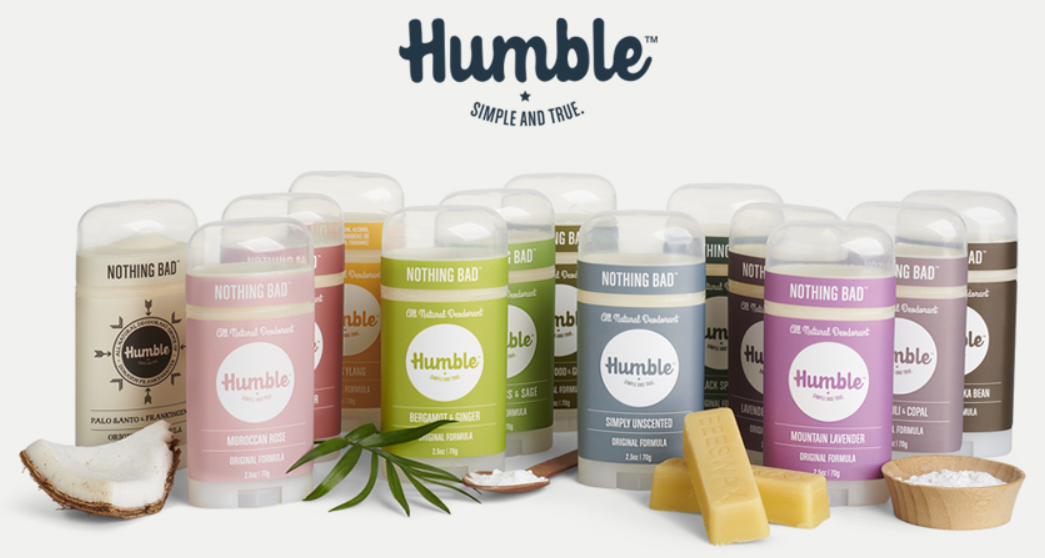
Deodorant: aluminum-free, applied to an area dense with lymph nodes. Most commercial deodorants use aluminum salts to block sweat glands — a daily application of a metal compound against lymph tissue. Ginger's Geranium & Grapefruit Deodorant Crème is what I use — no aluminum, no synthetic fragrance, no synthetic musks. If you're not ready for a small-batch crème or can't find Ginger's products in your area, two Amazon-available options I've vetted: Curie and Humble — both aluminum-free, both also findable at TJ Maxx. Ingredient lists vary by scent and batch, so check each one: no aluminum compounds, no synthetic fragrance, no cyclic siloxanes (D4/D5). If the list is short and readable, it's worth trying.
Children's products first. Swap kids' shampoo, body wash, and laundry detergent before your own — their skin is more permeable than adult skin and their developing systems are more vulnerable at lower exposure thresholds. Everyone (the brand) makes a kids' line — shampoo, body wash, and bubble bath — with a clean, readable ingredient list at an accessible price point. Found regularly at TJ Maxx and sometimes Walmart. Read the full label each time you buy: formulations can change between batches and the affordable version isn't always the clean one.
On-the-go wipes: WaterWipes (the sodium benzoate-free version specifically — read the label) are worth keeping on hand even when you're not in a diaper stage. They live in our car, gym bags, and hurricane preparedness box — when clean water isn't available, a clean wipe matters. Sodium benzoate is worth avoiding because it can convert to benzene in the presence of vitamin C; most wipe formulas contain both. The clean version is a rare TJ Maxx find — when you see them, buy a few packs. Worth it for travel, the car, flights, RV trips, and anywhere running water isn't guaranteed.
Active illness, high-risk contamination (norovirus, blood, raw poultry): this is where bleach earns its place. A properly diluted solution (1/3 cup per gallon of water) applied with adequate contact time and ventilation is the right tool. Use it when you need it. Put it away when you don't. Never mix with vinegar, ammonia, or rubbing alcohol — the combination produces toxic gas.
Clean products can be found affordably — if you know what you're looking for. Discount stores like TJ Maxx regularly stock clean-formulated personal care products at below-retail prices. The catch is that you have to vet every label yourself — the store doesn't curate for ingredients, only for price. That's what this list is for. Screenshot it. Download it. Print it. Keep it on your phone and pull it up in the aisle. If the ingredient list on the product in your hand matches the criteria here, it's worth the cart. If it doesn't, put it back — because the discount isn't worth the exposure.
Our full ingredient reference list is print-friendly — only the list prints, not the whole site. Jump to the list ↓ and use the Print / Save button there.
What I Actually Use
Every product here is something I personally use. Affiliate links noted where applicable — they help keep this site running at no extra cost to you.
On Amazon: Yes, the marketplace is flooded with overproduced commercial products, private-label knockoffs, and ingredients that wouldn't pass a real vetting process. I know. But Amazon is still where a lot of people actually shop — and for some of these products, it's the most convenient place to find them. So where it makes sense, I've linked there. I only link to products I actually use. Amazon links are affiliate links — I earn a small commission if you buy through them, at no extra cost to you. As an Amazon Associate, I earn from qualifying purchases.
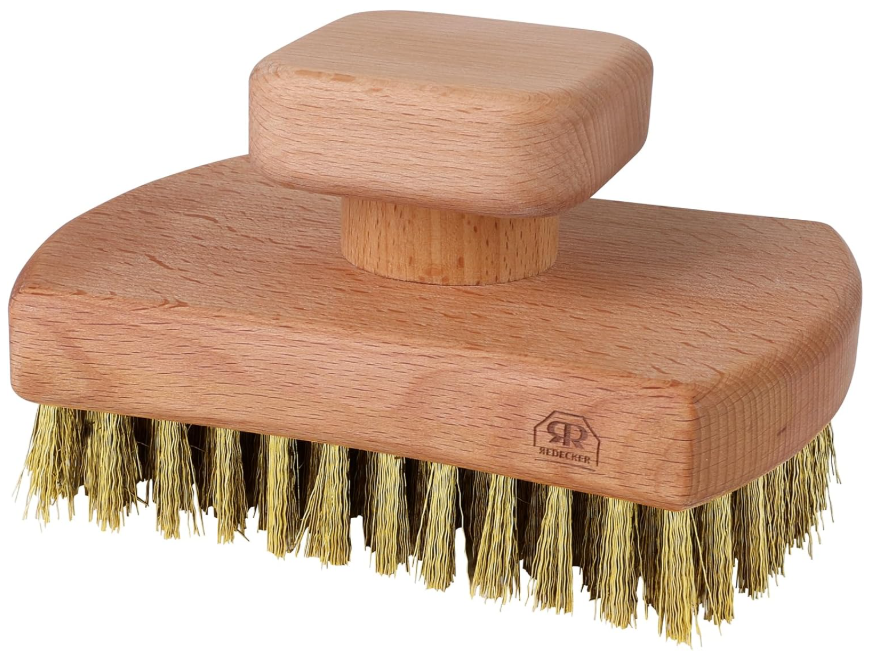
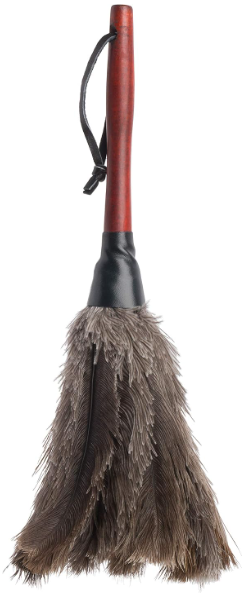
Handcrafted in Germany with natural fiber bristles — union fiber for tough scrubbing, tampico for gentler surfaces. Beechwood handles. Where something is made and by whom matters. I don't compromise here.
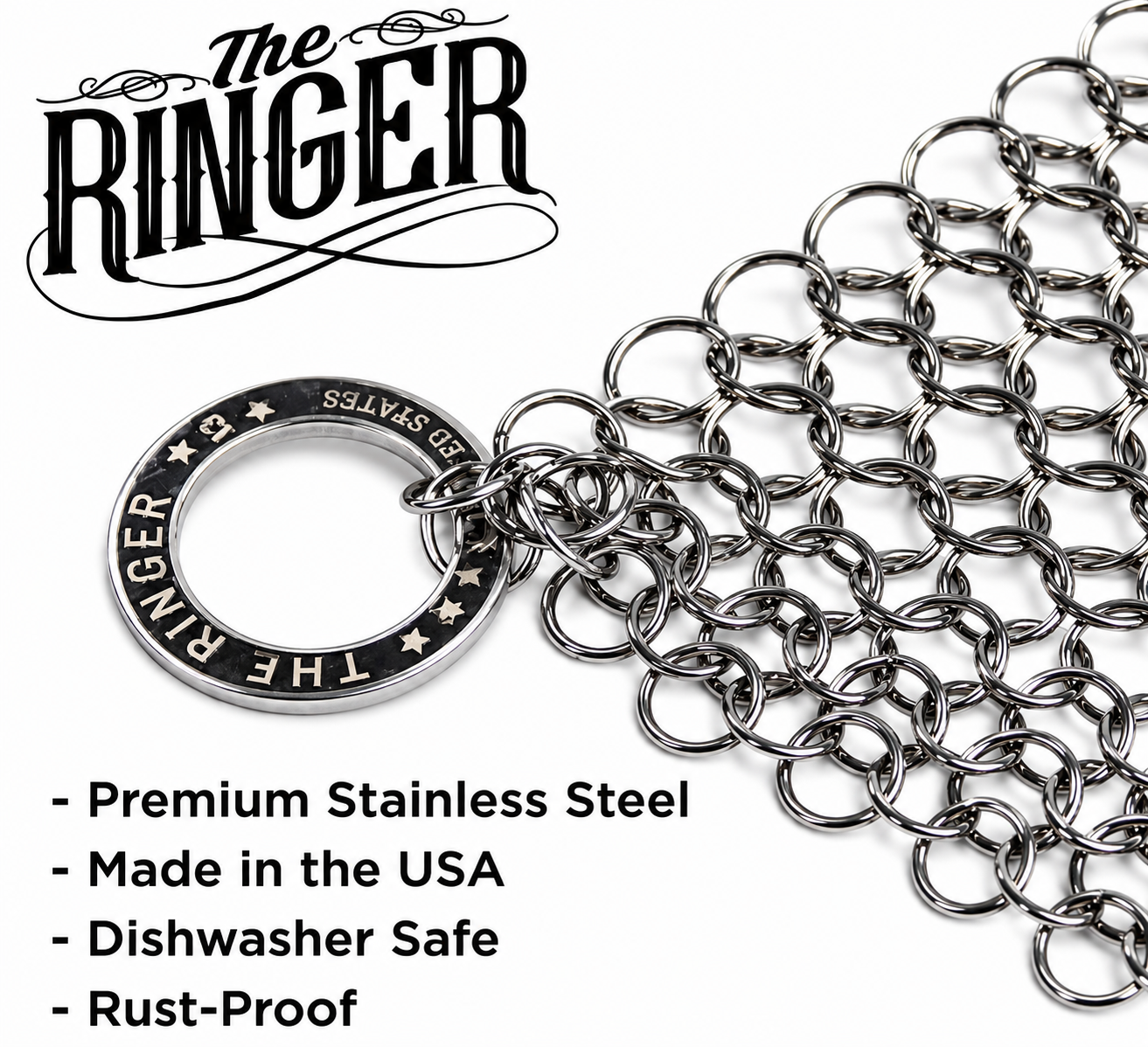
Machine-soldered stainless steel chain links. Cleans cast iron without soap or scratching the seasoning. Made in the USA.
I source mine freshly harvested from the Gulf of Florida — not imported, not processed with bleach or synthetic preservatives. Natural sea sponges are a living organism harvested sustainably from the ocean floor. They're biodegradable, genuinely sudsy, and build significantly less bacteria than synthetic foam sponges because their natural enzymes inhibit microbial growth. No plastic. No processing chemicals. When they're done, they go back to the earth.
Made by Ginger, a small-batch independent maker whose entire operation is driven by clean ingredient integrity. This paste handles the shower, sinks, counters, and dishes — one product, multiple surfaces, no mystery compounds. I'm an affiliate because I can personally stand behind every product she makes.
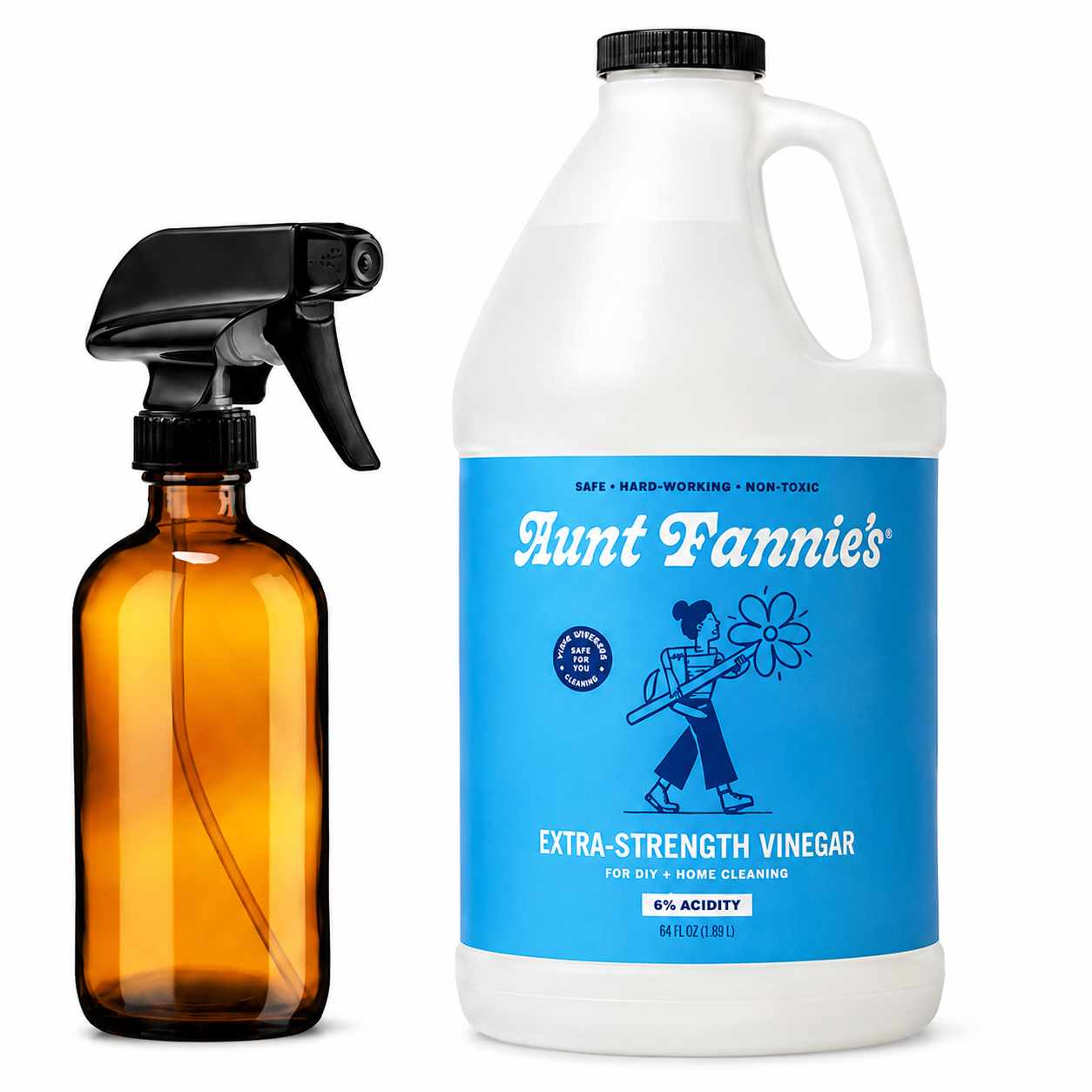
Two ingredients. Works on countertops, tile, glass, stovetops, sinks, and most sealed surfaces. No surfactant residue, no synthetic fragrance, nothing that lingers on the surfaces your food touches or your children's hands contact. The vinegar smell dissipates completely within minutes of drying.
Lodge makes bare cast iron without a factory coating — or you can buy thrifted cast iron, strip it down to bare metal, and season it yourself. I season with grass-fed tallow: high smoke point, stable saturated fat composition, polymerizes cleanly onto iron without the oxidation issues that plague polyunsaturated oils. One thin coat at a time, baked in at high heat, repeated. The result is a surface that is genuinely nonstick, contains no synthetic coating, and gets better with every use.
Standard stainless cookware uses aluminum rivets to attach handles — a different alloy than the pan body, with a porous surface that traps food residue and contacts everything you cook. Welded or rivet-free construction eliminates that variable. The pan becomes one continuous surface. Nothing migrates, nothing hides. Brands worth knowing: Made In, Demeyere, and All-Clad D3 — all excellent, all genuinely expensive. This is cookware worth putting on a birthday or Christmas list rather than buying all at once. In the meantime: TJ Maxx and HomeGoods regularly turn up quality stainless pieces from good brands at significant discounts. Worth checking the cookware aisle every visit — the finds are real, and the rivet detail is easy to check in the store before buying.
Borosilicate glass is genuinely inert — it doesn't react with food, doesn't leach at baking temperatures, and doesn't require any coating. It's not the same as standard tempered glass bakeware (like the original Pyrex formula sold in the US since the 1990s, which switched to soda-lime glass). Borosilicate has a lower coefficient of thermal expansion, which means it handles temperature changes without the stress fractures that soda-lime glass is vulnerable to. For baking, roasting, and food storage, it's the cleanest surface available.
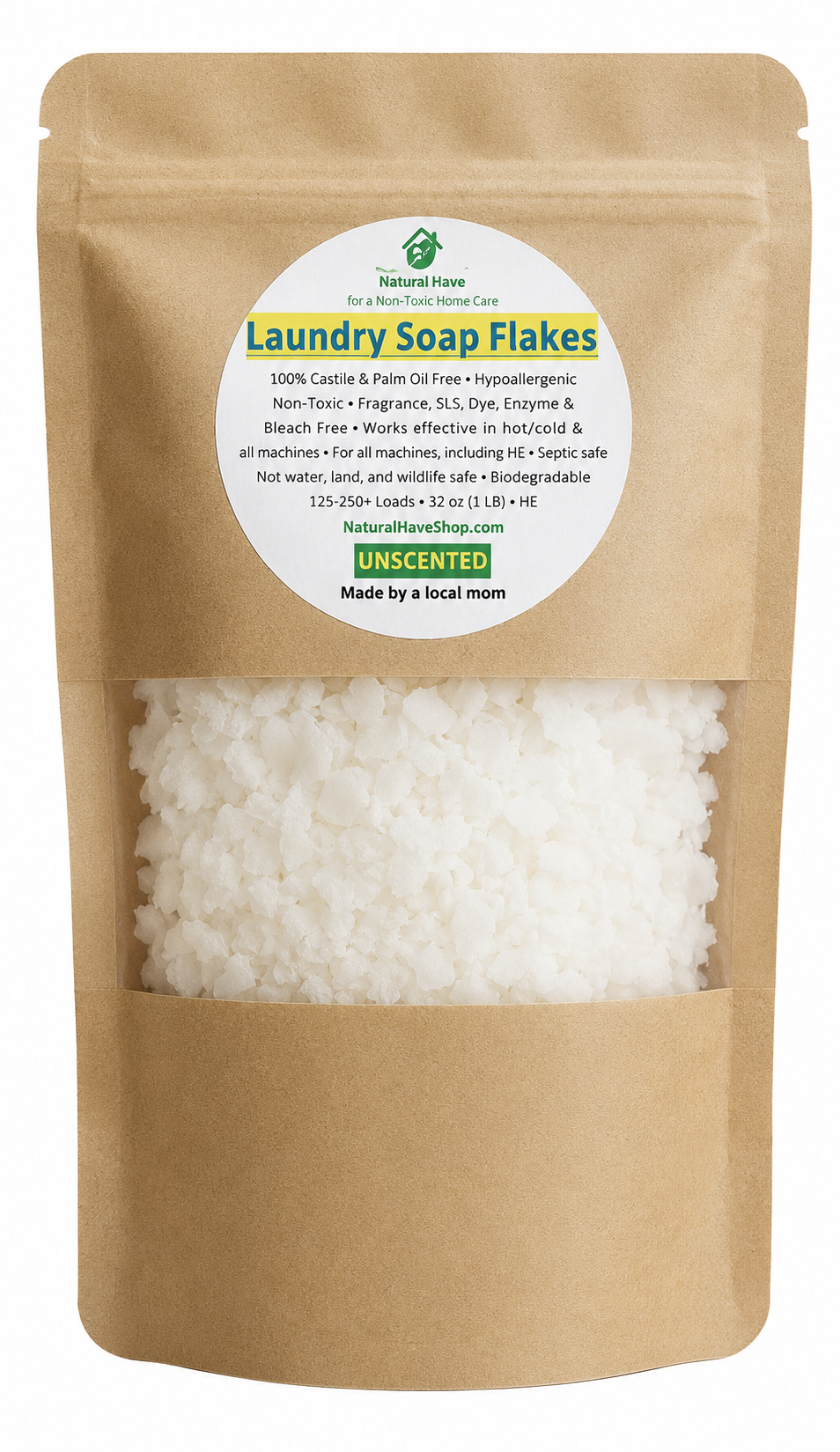
Small-batch powdered laundry soap from Ginger at SoapBox by Holistic Home. Clean ingredient list, personally vetted. No synthetic fragrance, no optical brighteners, no synthetic surfactant residue left in fabric.
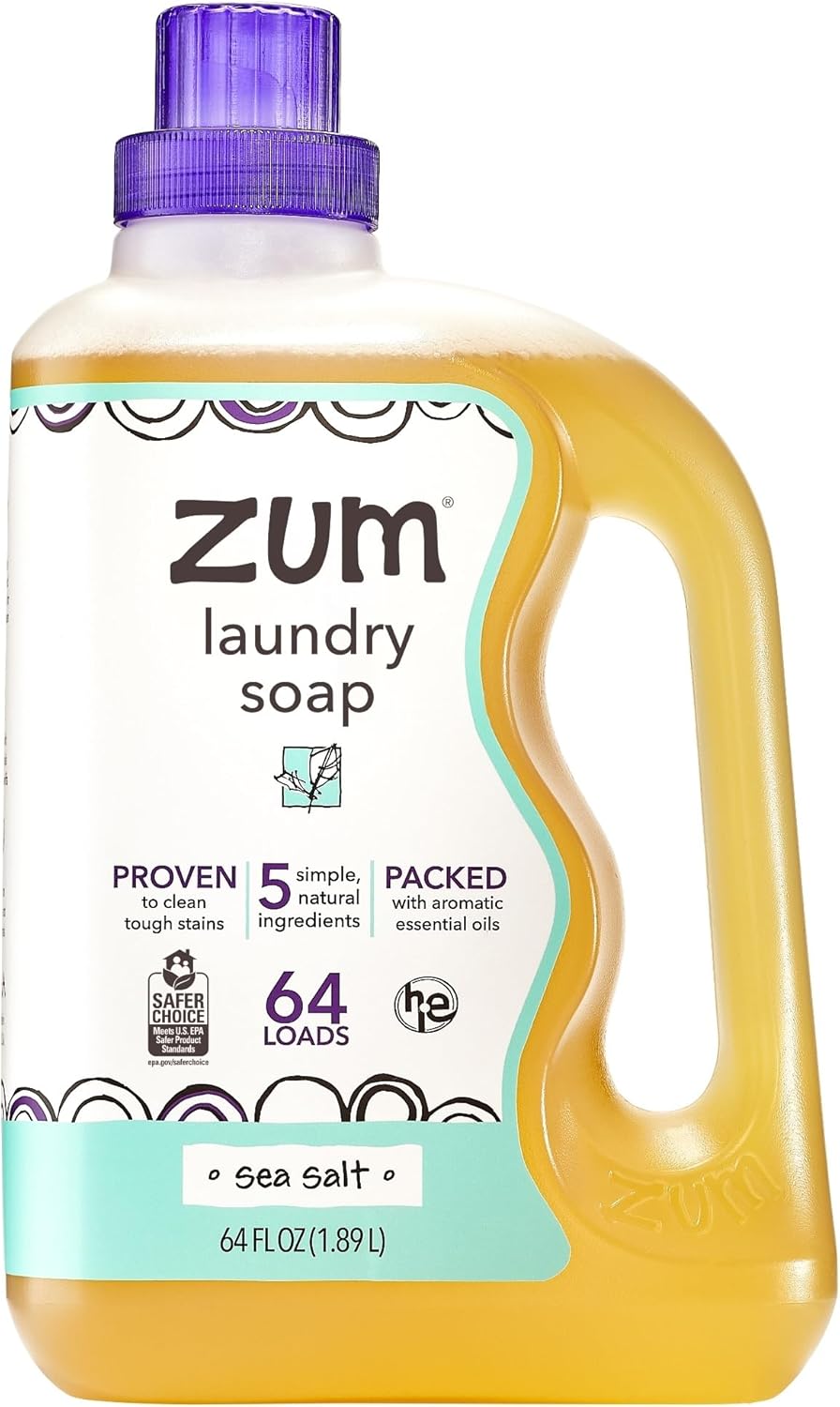
Essential-oil scented, no synthetic fragrance. Cleans well without mystery ingredients. Not all scents are equal here — some use artificial fragrance.
Bio-enzyme formula using Phytolase technology — plant-derived enzymes that break down protein, fat, and starch-based stains at the molecular level. No sulfates, no dyes, no parabens, no synthetic fragrance allergens, no CA Prop 65 chemicals. EPA Safer Choice certified. 97% USDA biobased. Hyper-concentrated — a small bottle goes a long way. Scent is natural: magnolia, bergamot, and cedar.

Pure washing soda. No additives. Excellent stain remover and laundry booster — the kind of single-ingredient product I always prefer.
100% natural wool. Reduces drying time, eliminates static, replaces dryer sheets for good. Lasts 1,000+ loads.
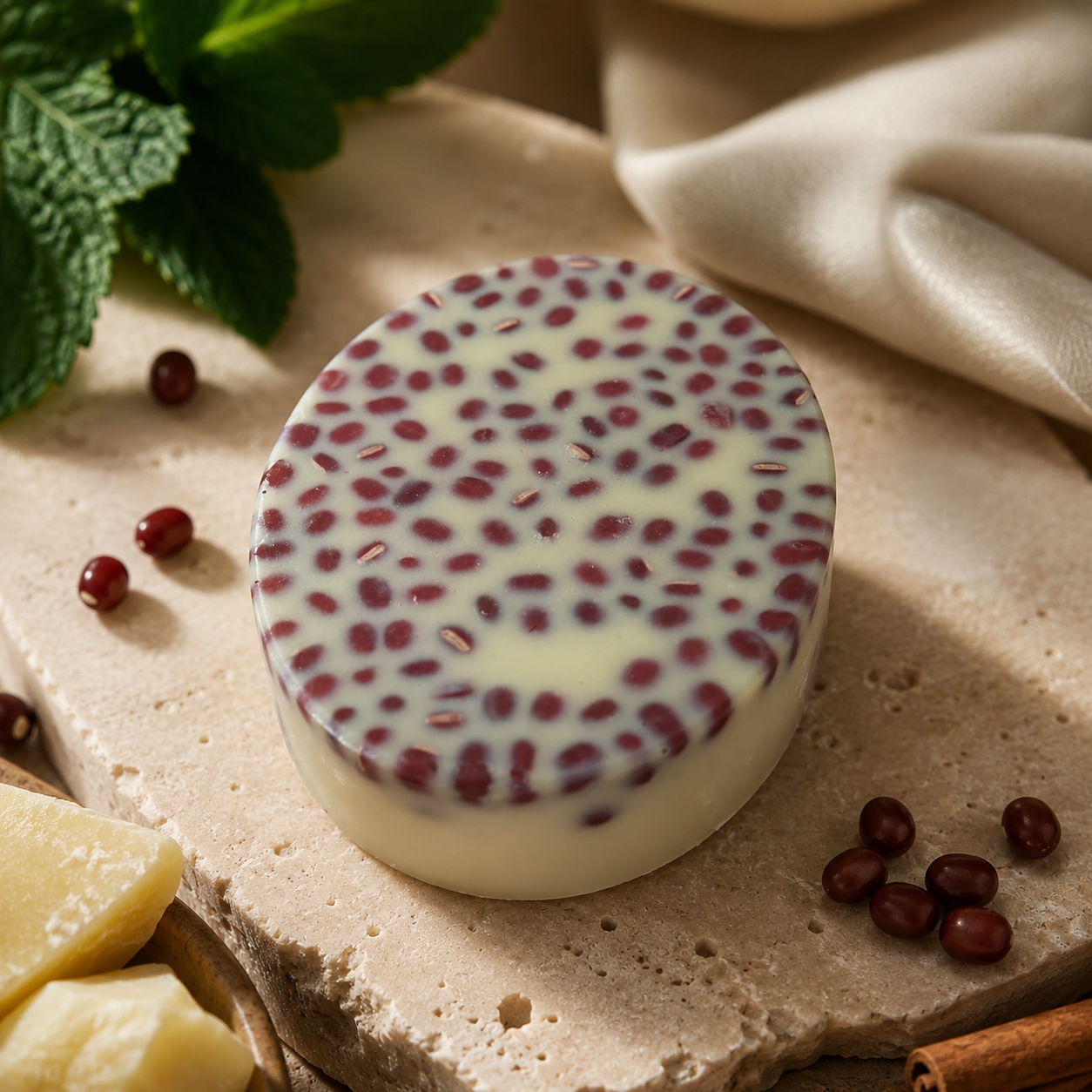
Tallow-based bar soap with pumice for gentle exfoliation. Made by Ginger with grass-fed and finished tallow and clean, minimal ingredients. The pumice does real work — this is a soap that earns its place in the shower.
A morning-use tallow bar from Ginger's line. Clean ingredients, no synthetic fragrance. Made with the same grass-fed and finished tallow base as the rest of her skincare range.
Ginger's vegan option — no tallow, plant-based, still made to her same clean ingredient standard. Pumice provides real scrubbing. I use this alongside her tallow soaps depending on the job.
Aluminum-free deodorant crème by Ginger. Scented naturally with geranium and grapefruit essential oils — no synthetic fragrance, no synthetic musk compounds sitting against underarm skin all day. The underarm area is dense with lymph nodes. What you apply there matters more than most people realize.
Aluminum-free, baking soda-free formula (important for sensitive skin — baking soda can cause irritation in the underarm area for many people). Clean ingredient list, available on Amazon and regularly turns up at TJ Maxx. Check the specific scent's ingredient list before buying — formulations vary.
Simple ingredient list, aluminum-free. Available on Amazon and a common TJ Maxx find. Multiple scents — stick with scents that use essential oils rather than "fragrance." Wide size range including a kids' version. One of the more affordable clean deodorant options without compromising the core criteria.
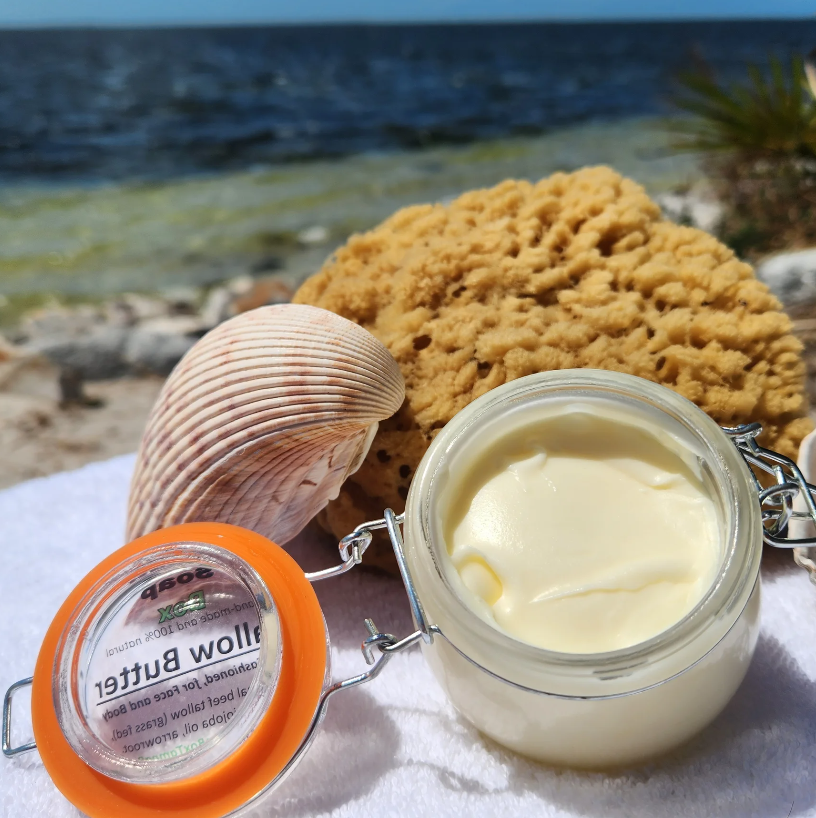
100% grass-fed and finished tallow butter for the body. Unscented. Minimal ingredients. Tallow is structurally compatible with the skin's own lipids — it absorbs without the occlusive heaviness of petroleum-based moisturizers, and without the synthetic emulsifier load of conventional lotions.
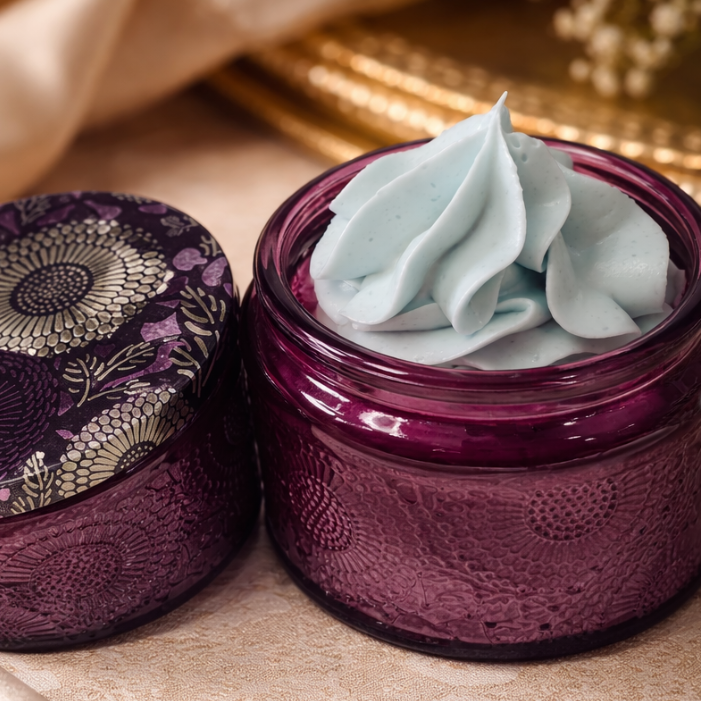
Blue tansy is an essential oil derived from a Moroccan plant — known for its azulene content, which is associated with skin-calming properties. Combined with grass-fed tallow in Ginger's formulation, this is what I use on my face. No synthetic fragrance. No emulsifier soup. Just ingredients with a reason to be there.
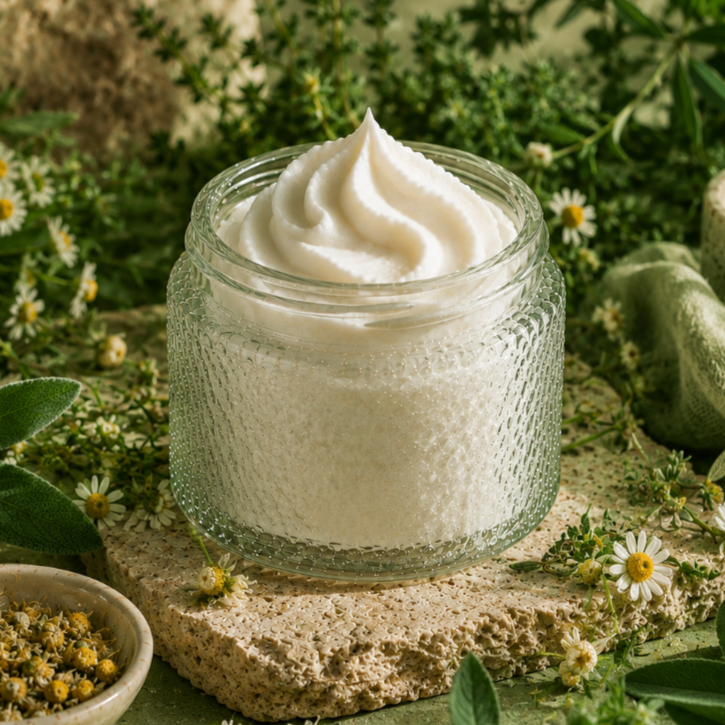
Chamomile-infused tallow butter for the face. Chamomile has well-documented skin-soothing properties — the botanical extract, not a synthetic approximation of it. Made by Ginger with grass-fed and finished tallow and her standard minimal ingredient philosophy.
A solid lotion bar — applied directly to skin, melts on contact. No water in the formula means no preservatives are needed to prevent bacterial growth. What you're left with is a concentrated, clean moisturizer with a short, readable ingredient list and no synthetic emulsifier load.
Sulfate-free, silicone-free, paraben-free. Cleans well without the SLS stripping cycle. Key actives: shea butter, rosehip oil, algae extract, biotin, panthenol. Surfactants are coconut-derived — gentler on the scalp barrier than conventional shampoo. Shows up at TJ Maxx unpredictably. I don't pay full retail for it.
Short ingredient list, every item plant-derived and identifiable. Preserved with potassium sorbate only — no sodium benzoate. Scented exclusively with palo santo essential oil, listed by name. Organic aloe, rosemary, green tea, and raspberry leaf infusion as the water base. Rahua ungurahua oil (sustainably sourced from Amazonian indigenous communities) as the primary conditioning agent. No SLS, no SLES, no parabens, no silicones, no synthetic fragrance, no sodium benzoate.
EWG Verified — the actual certification, not just a claim. Sulfate-free, paraben-free, no synthetic fragrance. Short, readable ingredient list. The tropical orange scent uses real essential oils. Available on Amazon and occasionally at TJ Maxx. Read the label on every scent if you buy a different one — formulations vary across the line.
Natural loofahs (a plant, not a sea creature — people are always surprised) and natural fiber scrubbers for the body. Biodegradable, plastic-free, effective.
100% merino wool underwear and socks. Sourced through Woolmark certification, manufactured in a BSCI-audited facility in China. They are transparent about this — they don't hide the tag. Yes, we wear wool year-round in Florida heat. No problem. Wool breathes, regulates temperature, and resists odor without synthetic treatments.
90% of their line is GOTS-certified organic cotton. Suppliers must comply with GOTS and GRS standards. Some items use algae-based dyes. Copenhagen-based brand with strong transparency roots.
GOTS-certified organic cotton across their entire line including underwear, socks, and basics. Fair Trade certified factories. Plastic-free packaging. No acquisition concerns, no asterisks — currently the most straightforward recommendation in this category.
Wool swimwear exists — and works beautifully for ocean, river, and lake swimming. Natural wool is naturally water-resistant and temperature regulating. For pools (chlorinated water), cotton is the better choice — chlorine interacts poorly with wool's fiber structure over time.
Conventional toothbrushes are plastic — head to handle. The bristles are typically nylon, a petroleum-derived synthetic. Bamboo handles with plant-based or BPA-free bristles are widely available and do the same job.
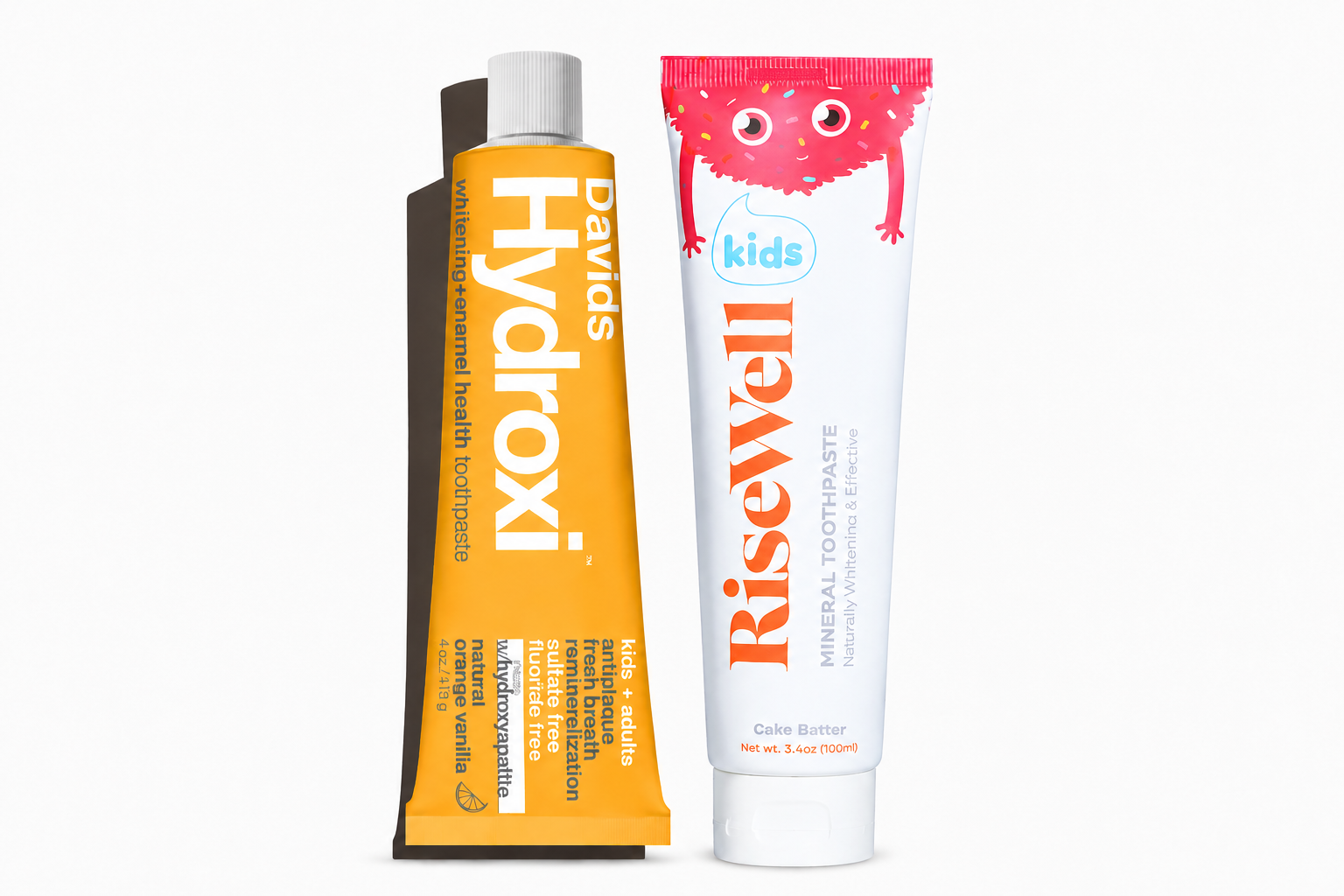
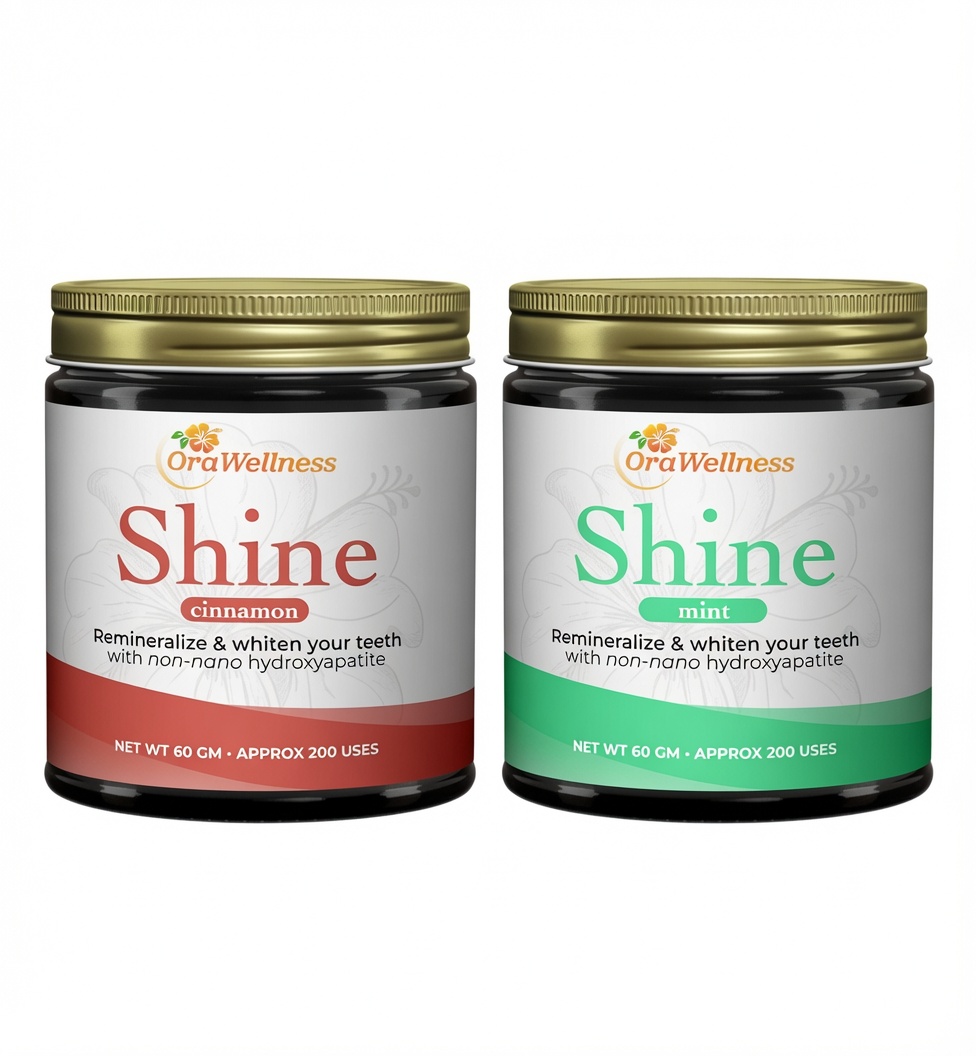
Formulated by functional dentists. No fluoride, no SLS, no synthetic fragrance, no endocrine disruptors. Active ingredient is 20% nano-hydroxyapatite — the same mineral teeth are made of — which remineralizes enamel without fluoride. Prebiotics (chicory root, xylitol) feed beneficial oral bacteria instead of wiping everything out the way conventional toothpaste does. A 2025 independent study in the Journal of Dentistry found FYGG statistically equivalent to leading fluoride toothpaste for remineralization.
All three are fluoride-free and worth knowing about. RiseWell and David's are hydroxyapatite-based remineralizing toothpastes with clean, readable ingredient lists. Dr. Bronner's is a solid clean option — minimal ingredients, trustworthy brand — but no exciting flavors, which matters when you're trying to build a twice-daily routine with kids who have opinions.
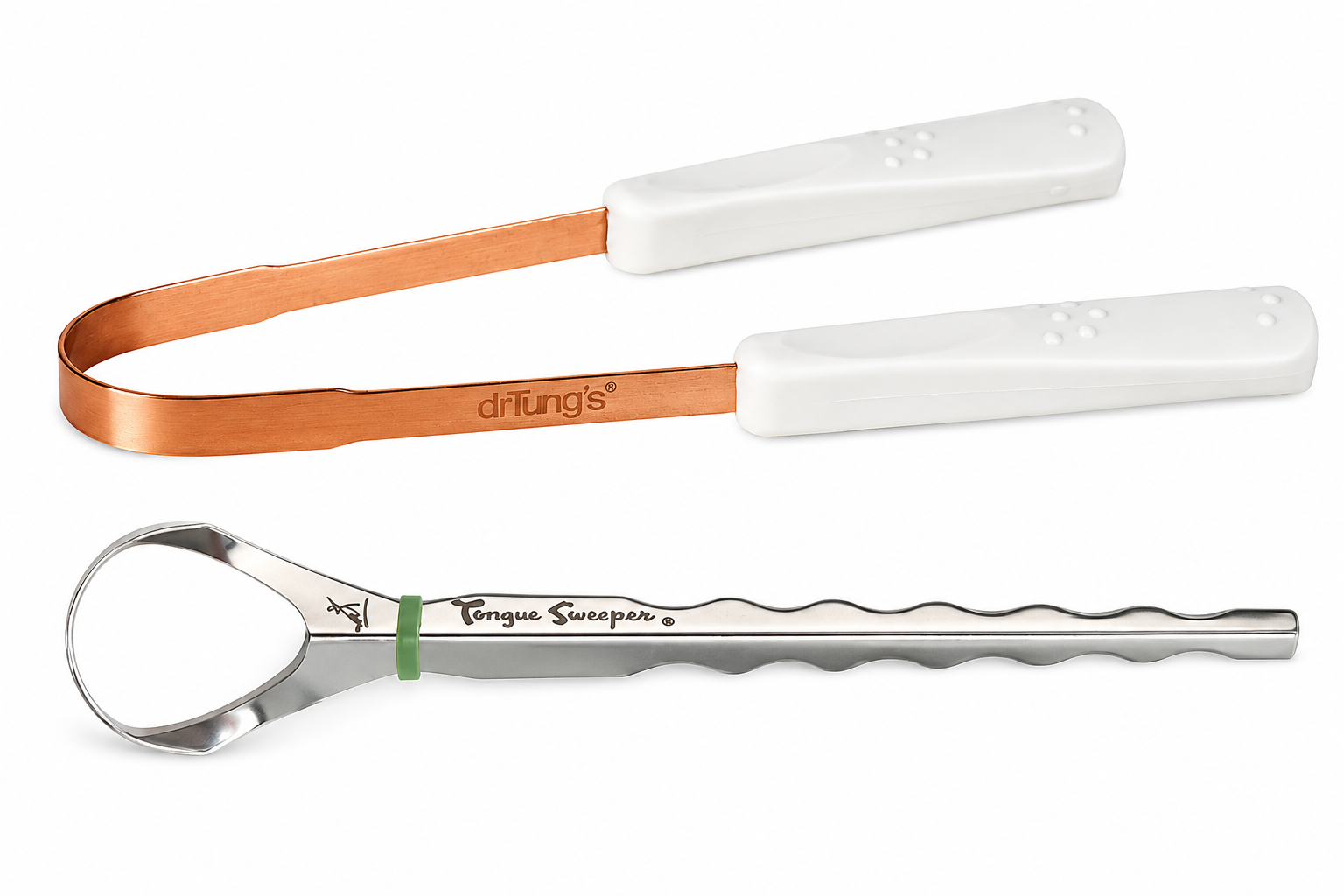
Ayurvedic practice with real evidence behind it — tongue scraping removes bacteria, dead cells, and debris that toothbrushing alone doesn't address. Stainless steel or copper are durable, non-leaching, and last indefinitely. Plastic versions defeat the purpose.
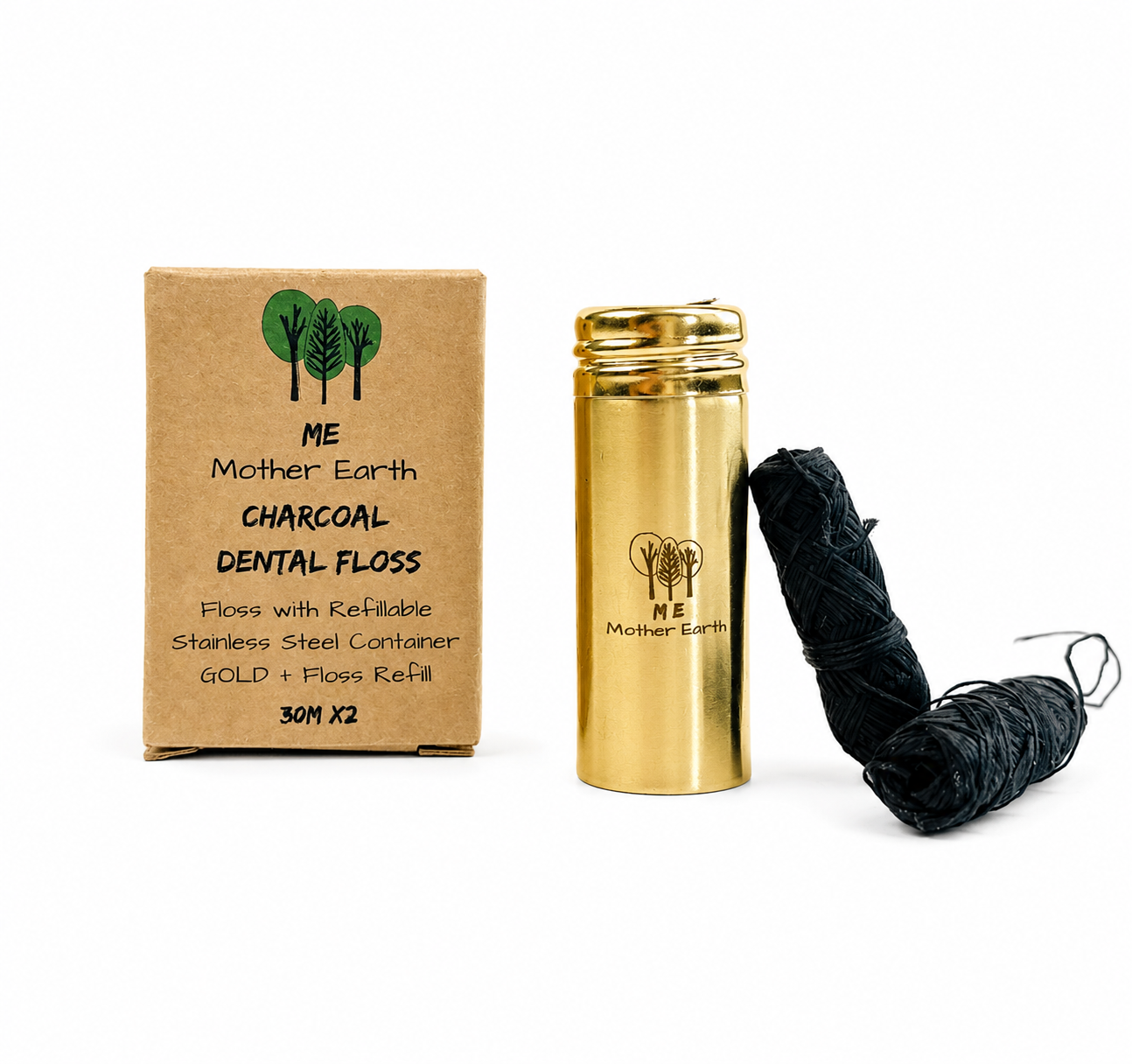
Three ingredients: bamboo charcoal fiber, vegan candelilla wax, peppermint essential oil. That's it. PFAS-free, plastic-free, 100% biodegradable in 60–90 days. Comes in a refillable glass or stainless steel container — buy a refill spool, not a whole new package. TÜV Rheinland certified for both floss and packaging. The black color from the bamboo charcoal lets you actually see what's coming out from between your teeth — which is either satisfying or alarming depending on the day.
Food & What Goes In
Your body doesn't distinguish between a toxin absorbed through skin and one eaten for breakfast. The mechanism differs. The outcome doesn't. This is a scannable reference list — ingredient names, one-liners, and risk flags are free. The full science behind each one — mechanism, where it hides, what to do about it — is in Volume II: Read the Label.
These compounds are added to keep processed food smooth, uniform, and shelf-stable. Their effect on the gut lining — the barrier between your food and your bloodstream — is the concern.
The full mechanism, where it hides, and what to do about it are in Volume II: Read the Label.
Get the Guide →The full mechanism, where it hides, and what to do about it are in Volume II: Read the Label.
Get the Guide →Some of these are concerning alone. Some become dangerous specifically when combined with other common food ingredients. The combination problem is the one the industry doesn't talk about.
The full mechanism, where it hides, and what to do about it are in Volume II: Read the Label.
Get the Guide →The full mechanism, where it hides, and what to do about it are in Volume II: Read the Label.
Get the Guide →Petroleum-derived azo dyes in food carry the same aromatic amine chemistry discussed in the clothing section — the same class of compounds, the same carcinogenic breakdown products, now ingested directly. And then there's titanium dioxide, which is in a category of its own.
The full mechanism, where it hides, and what to do about it are in Volume II: Read the Label.
Get the Guide →The full mechanism, where it hides, and what to do about it are in Volume II: Read the Label.
Get the Guide →These compounds keep powders from clumping, extend volume, and improve texture. They are functional for the manufacturer. Their presence in your food has no benefit to you.
The full mechanism, where it hides, and what to do about it are in Volume II: Read the Label.
Get the Guide →The full mechanism, where it hides, and what to do about it are in Volume II: Read the Label.
Get the Guide →The endocrine system doesn't distinguish between a hormone your body made and a compound that mimics one. These items interact with estrogen, testosterone, and thyroid pathways — some as industrial additives, some as compounds in otherwise whole foods.
The full mechanism, where it hides, and what to do about it are in Volume II: Read the Label.
Get the Guide →The full mechanism, where it hides, and what to do about it are in Volume II: Read the Label.
Get the Guide →This is the category most people encounter the most resistance on, because seed oils are in nearly everything processed and have been marketed as heart-healthy for decades. The oxidation story is the one that changes the conversation.
The full mechanism, where it hides, and what to do about it are in Volume II: Read the Label.
Get the Guide →Traditional food production used time, culture, and biological processes. Industrial production replaces these with enzymes, acids, and chemical shortcuts that produce a similar product faster and cheaper — but not equivalently.
The full mechanism, where it hides, and what to do about it are in Volume II: Read the Label.
Get the Guide →The full mechanism, where it hides, and what to do about it are in Volume II: Read the Label.
Get the Guide →The GMO debate is often framed as a binary. The more relevant question for daily exposure is not the modification itself but what the modification enables — specifically, crops engineered to survive repeated glyphosate application.
The full mechanism, where it hides, and what to do about it are in Volume II: Read the Label.
Get the Guide →White flour is not just wheat with the bran removed. It is a heavily processed, chemically treated product that then has synthetic vitamins added back in because the processing removed the natural ones.
The full mechanism, where it hides, and what to do about it are in Volume II: Read the Label.
Get the Guide →These are not ingredients — they are phrases. Phrases with specific legal definitions that do not mean what most people think they mean.
The full mechanism, where it hides, and what to do about it are in Volume II: Read the Label.
Get the Guide →The full mechanism, where it hides, and what to do about it are in Volume II: Read the Label.
Get the Guide →Not everything here is a danger. Some of these are tools — used intentionally for centuries by women to work with their bodies. The point is not fear. It's that bioactive means it does something, and doing something means context and timing matter. Knowing is the whole point.
The full mechanism, where it hides, and what to do about it are in Volume II: Read the Label.
Get the Guide →This list is a reference, not a verdict. Every household is different, every budget is different, and nobody gets it perfect. The goal is directional — fewer unknowns, more intention, one label at a time.
The Guides
Each rationale card on this site shows you the opening argument. The full mechanism — compound-by-compound breakdowns, source citations, priority guides, and the reasoning you can apply to products we haven't covered — is in the guides below.
Volume I
What's Actually In It
The mechanisms behind what you're putting on and around your family every day
Volume II
Read the Label. All of It.
The grocery store reference guide — what's in your food and how to find it on a label
Secure checkout via Gumroad. Download delivered instantly after purchase. Questions? Use the contact form below.
About
Low-toxic, ingredient-and-material-mindful picks for a real home, not a perfect one.
I'm paying attention to what goes on and in my family's bodies, but I'm also honest about how hard it is to find good options that are actually affordable, practical, and available.
I've got boys who make stains and build 'robots' in the garage, and a preteen girl who's getting into appearance and aesthetics. We're talking DIY clean makeup, talks on ethics, seeking out the best outdoor gear, finding durable toys, dodging mainstream everything, vetting technology exposure, learning what foods are nourishing, making good choices for clothes, and addressing peer pressure — all while still living in the same world as everyone else. I've got whiplash and I'm overwhelmed.
I research labels, compare ingredients, and try to make thoughtful choices — but I don't pretend every decision is perfect. I'm still learning and changing products constantly — whether it's because I've discovered they're sourcing low-end ingredients, the manufacturing process is poor or toxic, or the company sold out and reformulated with cheaper ingredients or faster production.
This is a busy-mom home, cooking from scratch, washing laundry, and cleaning with the cleanest ingredients I can find. I use elbow grease. A lot of elbow grease. It's definitely easier to go with the quickest solution — and I'm tempted sometimes. But things done right should take time. And that's what we've been made to forget, because we're heaved along all day long just to get it all done by sundown.
I buy products I actually use and share what works and what doesn't. Some are Amazon affiliate links. Some are from other brands, including a local maker whose work I trust and am affiliated with.
As an Amazon Associate, I earn from qualifying purchases on Amazon-linked items.
Got feedback, questions, or something I should look into? Keep me informed.
Feedback, questions, a product I should look into — send it here. I read everything.